Hiển thị các bài đăng có nhãn Design for Development. Hiển thị tất cả bài đăng

Thứ Tư, 12 tháng 9, 2012

Rebecca Reubens: Bamboo – Sustainability – Design
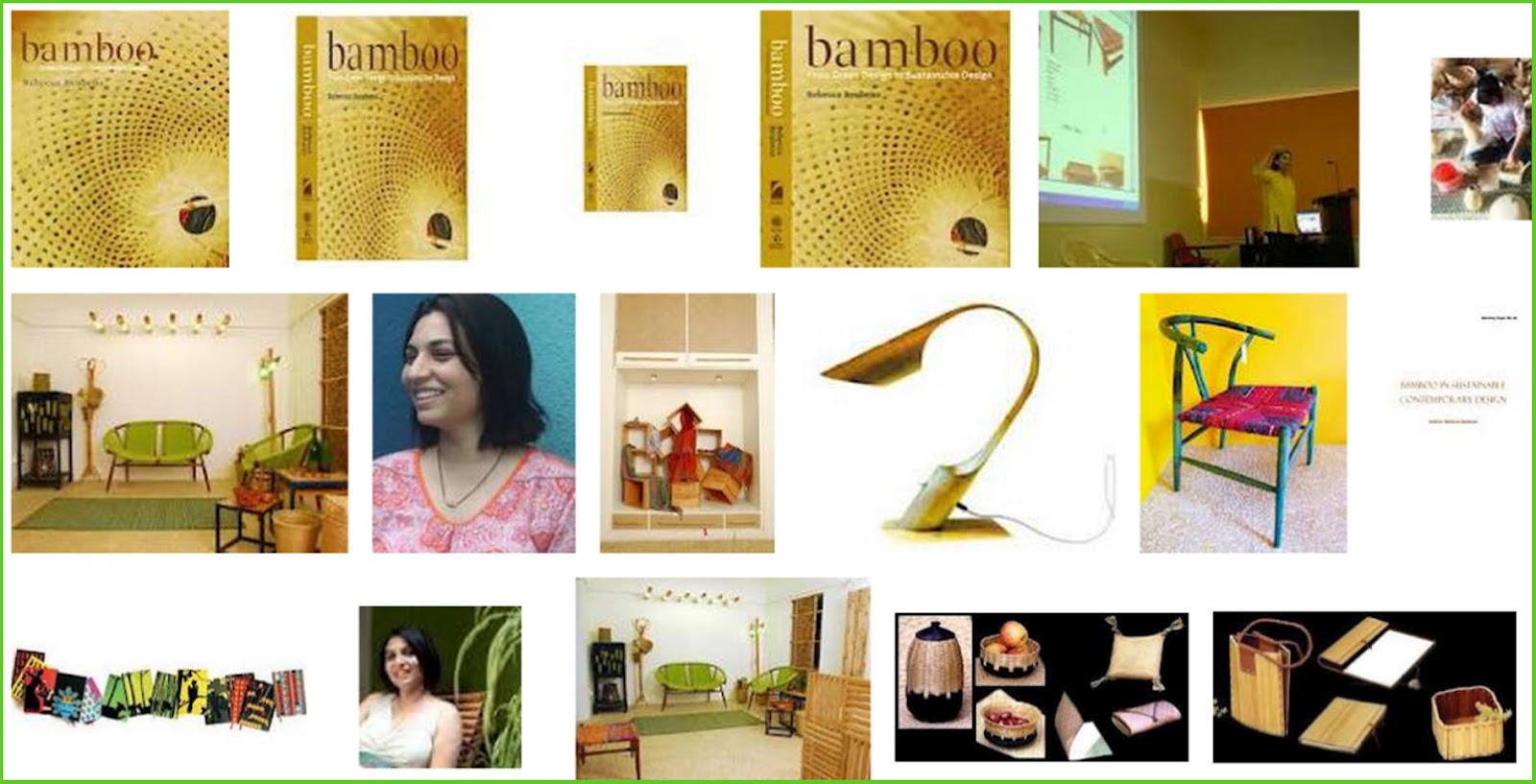

Rebecca Reubens: Bamboo – Sustainability – Design


The book “Bamboo: From Green Design to Sustainable Design” by Rebecca Reubens is now on the market and available on Amazon, Flipkart and at stores in India and overseas. Today I got my hands on my own copy inscribed by Rebecca and it is a good feeling to see the seeds sown so many years ago blossom and grow into such a fine offering. Some time ago she asked me to write an Introduction for her book and my note is now part of that product offering as the "Preamble" which I have quoted below.

Preamble

Rebecca Reubens has asked me to write an Introduction for her new book that attempts to bridge three fields that I am deeply interested in and in which I too have been working for a very long time now. The three fields are Design, Bamboo and Sustainability, all of which are extremely complex in their own right and there is little real understanding of the issues and approaches within each of them in the modern world due to a paucity of published research here. Modern design has been around for some time having evolved from its roots in the industrial revolution but it has unfortunately become a form of consumerist expression by industry and the profession and the real human development angle is all but forgotten and we need to rediscover this aspect as a fresh approach. Bamboo is still quite unknown tomodern  industry and the design profession although it is a grand old material of traditional societies across Asia and Latin America. Finally, Sustainability has arrived with a bang at the policy level since we are faced with the excesses of industry and governence that has caused both global warming and climate change as well as social unrest which is a product of our selfish ways, all needing a serious rethink and I am happy to see these three issues being addressed here in this book.

In the world of traditional societies in Asia, Africa and Latin America there exists a demonstrated deep understanding of all three subjects since these have been used in an evolutionary manner by local communities for many centuries. These continue to exist as a living culture in their rural communities and lifestyles even today but I must say that modern communication and changing aspirations is affecting these towards rapid extinction. Just as our plant and animal species are being depleted by massive modern exploitation of resources these pearls of traditional wisdom are being lost just as rapidly by human neglect. Here I must draw particular attention to the Apa Tani tribes of Arunachal Pradesh who have over many centuries of development in their niche valley in the Eastern Himalayas demonstrated a sustainable lifestyle that is based on the careful cultivation and utilisation of bamboo, timber and an integrated water management system for agriculture that is as yet an unknown value in modern life around the world.

Design, on the other hand, is a natural human activity that evolved with man over the ages but it has now has been relegated to the precincts of a professional marketing priesthood that manages the activity in the marketplace of our global economy. Design as it was deeply understood by traditional societies as a broad based human imaginative activity has been relegated to the back burner since we have chosen to follow the specialized path of science and the trained manager since they provide rational answers for everything and modern man and their society can only decide based on explicit knowledge while design in most cases is felt or tacit knowledge and is based on instincts that are better judged by sensitive interpretation rather than by the application of cold logic. This is why I felt compelled to set up my blog titled “Design for India” where I could debate the other dmensions of design that are much needed in India today.

Bamboo, has been nurtured by traditional societies across Asia and Latin America and its varied species provide a natural material that had wide spread use in thousands of traditional applications in many parts of Asia, Africa and Latin America where it was abundantly grown but with the arrival of industrial revolution and the spread of Western know-how the dominant materials of our economies started depending on minerals like stone, limestone and cement, metals like steel and copper, synthetics such as plastics and petrochemicals and some economic agricultural commodities such as cotton and jute. Bamboo was therefore neglected by the colonial leaders as the spread of technology and formalized knowledge also meant the reduction of local knowledge in materials that were already in wide and sophisticated use in Asia and Latin America, particularly bamboo which was considered the ‘poor mans timber’ while the emphasis and official attention of the Government in India shifted to timber and wood during the heydays of the British Raj.

Sustainability is the hallmark of most settled societies that evolved slowly over thousands of years and gradually built up their lessons of stable and predictable agriculture and lifestyles that were quite in sync with the beat of natures’ processes. However with the arrival of power assisted technologies and communication man could do a lot more and much faster and the race for the dominance of nature commenced in real earnest and each nation tried to outdo the other in their race for global dominance in economy, power and social well being, all measured by growth and growth alone. However, the destruction of pristine rain forests in search for minerals and material wealth and the release of toxic gasses into the atmosphere has had its natural consequences and we are on the threshold of rediscovering the concept of sustainability in the face of the threat of human extinction, a threat that is imminent, if corrective strategies are not adopted by the worlds citizens and their political leaders on a most urgent basis. Sustainability is then a call for a return to a steady-state economy that echoes nature in all its involved and intertwined processes.

This impending crisis places this particular manuscript at the centre of the debate where all three subjects can play a meaningful role and in trying to address and bridge these three difficult but critical fields that promise to bring long term benefits that can counter the problems of our uncontrolled developments of the past few hundred years. Design strategies will need to be explored and design itself will need to be understood and applied by political leadership across the world along with the subjects of science, technology and management and design at a deep level will play a huge role in the reversal of global warming and the move towards sustainability in the days ahead. Bamboo is the fastest growing plant material known to man and we will need to learn to use it in new and improved ways to supplement our vast needs for materials across many areas of application and much research would be needed to fill the gaps in our knowledge along with an urgent attempt to codify and garner the traditional wisdom that still exists across the bamboo culture zones of the world, particularly in Asia and Latin America. Sustainability too is a subject of current scientific and political interest and there is much that we need to understand about the symbiotic processes that live and work in nature and then be able to use this understanding back into our own ways of living and doing things in the future.

This manuscript, “Bamboo: From Green Design to Sustainable Design” by Rebecca Reubens stands as a brave attempt to bridge the huge gap and I am sure it will encourage others to follow in the much needed integrative research and design actions that is needed in the days ahead. Rebecca studied design at National Institute of Fashion Technology (NIFT) and then joined National Institute of Design (NID) in the Furniture Design discipline where I used to trach teach till I retired in 2010. She started her own journey into bamboo when she took on the subject as her Diploma Project as a student of Furniture Design at NID. We had a challenging project handy as part of the Bamboo & Cane Development Institute (BCDI)project that I was heading in 2001 and she has stayed with the subject and journeyed far as a member of the International Network of Bamboo & Rattan (INBAR) field team and now she has taken it on as her subject for her PhD Thesis at TU Delft in Design and Sustainability through the medium of Bamboo. She also went on to set up her own enterprise to work with local communities in Gujarat and from this to learn the significance of human effort at the grassroots using Design, Bamboo and Sustainability as her driving principles and to learn from this experience that which is not yet stated in any book so far, lessons from real life experiences from the field. All three much needed today and I wish her success.

Design Thinker and
Author of blog – www.DesignForIndia.com
12 March 2012

Unquote


Thứ Bảy, 11 tháng 8, 2012

Kerala State Institute of Design: Infrastructure and Directions in 2012

Kerala State Institute of Design: KSID - Where do we go now?

Architects visualisation of KSID campus

On 9th and 10th November 2009 I was invited to a vision document meeting at Kovalam and this event was reported previously at this post here on my blog as New design school at Kerala State level.
The proposed institute has come a long way and the infrastructure is now taking shape on the ground and we will now need to review and refresh our approach and take the next steps in the process of establishing a new design school for Kerala State.

For this first meeting I had also submitted a note that raised several questions and proposed some directions that would need to be addressed by the political and administrative establishment in Kerala that is dealing with  the setting up of such a school of design. We would need a working definition of design as well as a strategy that could inform the managers and faculty in shaping the programmes and activities of this new institution. My note of 2009 is quoted below and these questions are still relevant when we go forward towards the establishment of the infrastructure and teaching programmes and other activities of the institute.

Quote
Kerala State Design Institute: An approach paper and some thoughts for the meeting.

Prof. M P Ranjan
National Institute of Design, Ahmedabad
7 November 2009

Design is a very old activity and Kerala is full of great examples of its sensitive but unselfconscious use in most of their traditional buildings and spaces, traditional artifacts, festivals and events and traditional knowledge systems, all of which are the product of great design thinking in the past. However we need to ask the question in the context of the emergence of modern design as a contemporary discipline and one that has now been seen as a critical resource for development and planned change across many sectors of need. We now need to know – What does Kerala really need? Do we know the answer to this question?

This is very different from asking the question – “What does Kerala want?” – another design institute! What shall be the unique differentiators and driving principles here?

Ever since design was imported as a fairly developed offering from the West (USA and Western Europe) into India in the post Independence era we have been asking this question and there has been much confusion on the true role of design amongst even those people who funded and managed design in the country including those in Government as well as at the Institutions that were set up to further the use of design in India. The initial impetus came from Western ideas that were adopted wholesale and it took many years of engagement before the faint questions started emerging about how this genre of design could be adopted to local conditions in a developing economy such as India and at the same time corporate industry went ahead and addressed the consumption side of the equation and used design as a corporate bedfellow to generate hype, style, and a pursuit of business profit.

Many people equated design to being a subset of art and numerous art colleges set up in India over the past century were called upon to provide services in the design sectors and this has produced a vast range of design professionals across many sectors of Indian industry in the absence of any formal design education schools in the country. Design has also been equated with science and technology and numerous R& D centres have been set up across India to deal with technological innovation and technical and scientific research and these too have created bodies of expertise that have impinged on various design contributions in many sectors in India. However, the products from design schools have been few in comparison and it is only after economic liberalization that many of these trained individuals have been able to make a significant mark in the innovation landscape of the country. In recent years design is being seen as a management resource and in particular design thinking is being offered as a critical new approach to planning and creating exciting scenarios for the solution of complex problems facing all kinds of development and business objectives.

A few year ago, in 2005 as part of my Design Concepts and Concerns course, I asked my class in the Foundation Programme at NID to explore and imagine the nature of new design schools that may be needed across a number of regions of India since there was the talk in those days about an impending Design Policy for India and it was under active discussion in Government as well as in some circles of design professionals and academics in India. Many interesting alternatives were explored and offered by the students teams each having looked at the regional resources and their own map of the strengths of each region since the thesis was that design is a local phenomenon that must be based on available resources to meet recognized local needs. Each region has its own strengths that can be leveraged to get it locational advantage as well as traditional resources that could form the platform for differentiated and unique offerings informed by the local culture and its creative reinterpretation as a modern offering to meet contemporary needs.

Around the world new design institutes are springing up each day and the diversity of these new institutes are a challenge for us to try and understand the forces that are at work in the attempts to apply design and design thinking to a whole new set of applications and areas that have so not been addressed by traditional design schools that have been based on the imported models from the West. Over the past 15 or 20 years we have tried to look at the introduction of design capabilities to Indian needs in specific sectors and here I can offer the examples of three specific institutions with which I have had a personal association in trying to articulate and establish in a climate and a context in which design itself is not easily explained nor understood by those who need to nurture it and provide it with sustenance in the form of funds and a climate in which it can take root and grow. This I believe will be one of the biggest challenges for the new institute in Kerala and much of our effort may need to be focused on trying to make a space for it and the people associated to establish themselves before they are asked to deliver great results.

The experience so far points out that there are several approaches that could be taken and much will depend on the canvas that is available on which to paint our visions. The establishment of IIT’s and IIM’s in India seem to have some consensus as far as scale, reach, content and value but unfortunately no such consensus exists when it comes to the establishment of a design based organization be it a school or a development oriented organization. We will need to cross this hurdle first at the forthcoming meetings on the 9th and 10th November 2009 at Trivandrum and if we can get both a political as well as administrative blessings for a shared vision for a new design institute for Kerala the task ahead will be much easier than the various cases shown by many the efforts that have taken place across India in the past 20 years. However there is no ambiguity about the value of design when we are able to embody design thinking and action skills in particular individuals and teams through the process of design education and it is here that we need to ponder as to whether we need specialists or generalists who can be open to work with the huge body of technical and administrative teams that are already available from many fields and use this as a base to make for a vibrant platform for innovation with the use of these capable and flexible generalists who are able to work as team players and provide the essential ingredients to bring sensitive change where it is most needed in Kerala.

The big question is what are these needs and what needs to be changed and how should we go about this?

Some recent efforts to look at design from a fresh perspective are worth noting and we may look at our emerging understanding of design and design thinking in a number of unconventional areas of application before we freeze on directions and content. Design and design thinking have been applied to numerous exciting and complex situations and we need to take stock of these before we spell out the roles and responsibilities of a new institute of design for Kerala that will find its direction and purpose and reach maturity and excellence over the next 10, 20 and 50 years ahead. Can we look forward and jointly draft scenarios that are plausible and feasible and then decide the platforms form and content and articulate the way in which we can navigate our way towards the future?

References

1. Charles& Ray Eames, India Report, 1958, Government of India, New Delhi
2. National Institute of Design, Feasibility Report for IICD Jaipur, Government of Rajasthan, 1993
3. National Institute of Design, Feasibility Report for Bamboo & Cane DevelopmentInstitute Agartala, Development Commissioner of Handicrafts, Government of India, 2000
4. National Institute of Fashion Technology, Accessory Design Curriculum, NIFT New Delhi, 1991
5. Soumitri Varadarajan, Ambedkar University, Service Design Curricullum, AmbedkarUniversity, New Delhi, 2009
6. UffeElbek, Kaos Pilot A-Z, Kaos Pilot, Aarhus Denmark, 2003 (http://www.knowmads.nl/) and (http://www.kaospilots.dk)
7. G K VanPatter, NextD website, Sensemaking initiatives 2002 to 2008 (http://www.nextd.org/)
8. Design for India blog (http://www.designforindia.com)
Unquote

Admin block at an advanced state of construction at KSID campus

The Government of Kerala has taken a step that no other State Government has done so far, that of setting up a design school to address the needs of the region. The only other example that comes to my mind is the setting up of the Indian Institute of Crafts and Design (IICD) in Jaipur as a centre of excellence for creating change agents for the crafts sector using design as a core driver. This institute was set up by the Rajasthan Government based on a Feasibility Report for the proposed School of Crafts that was prepared by me as a member of the National Instituite of Design, Ahmedabad in 1993. In 2001 we helped redefine through our Feasibility Report, the role of the Bamboo and Cane Development Institute at Agartala to use design as a core driver for the bamboo sector of the country, as a sector specific institute that used design, technology and management in an integrated manner to get best results. Kerala too will need a forward looking vision statement in the context of our new understanding of design and the ongoing debates that have been raised by the mindless expansion that has been initiated by the DIPP, Government of India for the premier design education institute of the country, the National Institute of Design that led to a public outcry from groups of concerned design academics and professionals from across India through a new initiative called the Vision First initiative that has called for a serious rethink and wider discourse about the four new NID's that are proposed as part of their plans.

We now need a second meet on the proposed KSID's directions and this should lead to a clearly articulated vision statement that can help both Government of Kerala and the KSID functionaries to steer the institutes fledgling infrastructure as well as its new education programmes through the political channels of approval and public acceptance in the days ahead. Just yesterday evening, I was discussing the status of the KSID proposals with the members of the vision meet in 2009, Prakash Moorthy and Sangita Shroff, while having tea at the BMW at the NID Paldi campus and later last night I saw P T Girish's note in my mail box with the attached photographs of the KSID as it stands today. Another interesting coincidence is that I have just started teaching a course at the CEPT University for the Masters level programme at SID, the MIAD class on
Understanding Crafts and its Context in India where we have assigned the students three States to research, Rajasthan, Orissa and Kerala and they have an assignment to explore the use of local crafts in space making tasks that could be applied to the creation of a new holiday resort in their region. More about this course in another post soon. These connected set of events triggered this particular blog post and I hope that Kerala sets up a leadership position with the use of design for development and that this move will go well beyond what is needed in the crafts sector but also look at the needs for "Design across the 230 sectors" of our economy where design is critically needed but our political and administrative class do not yet seem to know this from the kind of support that design gets in the national and state budgets today. Can Kerala show the way? Only time will tell.

M P Ranjan

Thứ Bảy, 28 tháng 2, 2009

Katlamara Chalo: Seedlings of Wealth in Action

“Katlamara Chalo”: A call for design and political action using the “Seedlings of Wealth” strategy for rural development in India.


Prof M P Ranjan

Image 01: A collage of images from the field workshop in May 2005 at Katlamara in Tripura State. A cultivated field of Kanakais bamboo at Katlamara, one of over two hundred such fields in the area. Nomita Debbarma with the DDPJoint and Nomita with Bani Urang at the drill machine set up during training sessions in summer of 2005. Samir and Ranjit the master trainers who worked with the design team in the field.


We first visited Katlamara in 1986 while on a project for the Government of Tripura and on that visit Gajanan Upadhayay and I found that systematic plantation could indeed provide high quality material for new applications of great value. We collected a few poles of “Kanakais” – Bambusa affinis – and brought these back to NID where they stayed dormant for several years but they also excited all of us and stimulated students to explore concepts with the use of this strong and straight rod shaped material. This provided grounds for our further strategies with bamboo and in my Bali paper of 1995 I had proposed for the first time my evolving conception of the farm to industry model for rural development using bamboo as a material driver which I later elaborated as part of the UNDP National vision report called "From the Land to The People: Bamboo as a Sustainable Human Development Resource for India". The six stage model for development proposed then was accepted by the UNDP in 1999 and the major initiative of bamboo promotion was started in India with UN funding being channeled through the Office of the DC(Handicrafts). You can read more about these interventions from my website at these links below:
1. Katlamara Chalo! Lesson in Rural Development
2. Bamboo Initiatives at NID
3. All bamboo joinery strategy

Image 02: Seedlings of Wealth model that was proposed in 1995 at the Bali Conference was implemented at Katlamara and the book about the field work and design strategies are now available between the folds of this cover, in a 64 page book titled “Katlamara Chalo: A Design for Development Strategy” (see link below or download 46.5 mb pdf file here).


In this book we have shared the process of how the farm to market strategy was developed through the various stages and how these concepts provided us with the background and conviction that the sustainable use of bamboo could bring economic sustenance to the local village farmers as well as to local bamboo craftsmen and entrepreneurs who depend on their craft as a source of their livelihood. The various prototypes that were developed as well as the strategies adopted by the design team are described along with numerous illustrations of the examples and the work in progress as a documentation report. Between 2001 January and June of 2004 we had the additional task of building a new Institute at Agartala called the “Bamboo & Cane Development Institute” (BCDI, Agartala) where we innovated a curriculum structure that helped train 160 craftsmen in the five batches that were conducted using our new curriculum, all involving NID faculty and research teams as trainers and catalysts in this education experiment. You can read more about the BCDI experiment at these links below:
1. BCDI, Agartala: A new Curriculum for Rural Transformation – Links to papers
2. Achievements of the BCDI, Agartala – Link

Image 03: Sample pages from the “Katlamara Chalo” book – illustrated pages that introduce the strategy as well as show the products and the story so far. Since this project in 2005 we have extended the range of products as well as conducted additional training for craftsmen from adjacent village clusters as part of the Tripura Bamboo Mission initiatives.


Design at the strategic level is not well understood in India or for that matter in many other parts of the world and in most cases almost all of the development success is attributed to the good use of science and technology and of management and planning skills while contributions from design are all but ignored. This is also reflected in the scale and frequency with which science and technology efforts and research are funded by our governments and in India the science and technology sector draws several thousand times more funding for development initiatives and the case for the use design is only considered if one of us, faculty from the design Institutes, happens to be present at some critical government or planning board meeting and we speak out in support of using design as a development resource.

The furniture development using the Katlamara bamboo for the rural development strategy is just one leg of a multi-pronged, multi-location and multi-year design and development effort that we have been pursuing at the NID Centre for Bamboo Initiatives over the years. We are pursuing this to show an even larger story that design at the strategic level (as we understand it at NID) can be a great and powerful force that can transform India if it is used in the 230 sectors in which it is needed but unfortunately which is not yet understood when compared to the manner in which with science and technology and management is understood in India. Many industrialists and government officials in control of development funding still think that design is a cosmetic addition to technology but this is far from the truth although the design media (in India and across the world) still seem to focus on fashion and aesthetics aspects of design and this I call "page 3 design" and I wish to promote the strategic design initiatives in India across all the sectors of our economy.

You can see Katlamara explorations as well as the range of furniture developed in 2005 at this link below:
1. Katlamara furniture workshop 2005 – Links and pictures
2. Download “Katlamara Chalo” book as a 64 page pdf file 46.5 mb

Image 04: A collection of products developed as a follow-up to the Katlamara Chalo Workshop. The Dismantling and stackable tables, benches and storage racks are based on the component stackable configuration developed by Sandesh R using the Katlamara Bamboo Joint using the DDP strategy.


This is an ongoing engagement and after the project in 2005 we have had the occasion to revisit the project location as well as collaborate with a number of partners in furthering our objectives of providing development interventions using design strategies of product diversfication and matching these to local capabilities as well as aspirations. In recent times we have a major project with the Tripura Bamboo Mission where we helped develop a new collection of products that could sustain local markets and these were introduced to local craftsmen in an effort to seed local entrepreneurship based on local demand. This “local to local” strategy saw the design team focus on one product category called the “Alna” a local favorite, a clothes rack, which is found in every home in the region, but is rarely made in bamboo. I have reported about this collection in a recent post which can be seen at this link here.
1. Tripura Bamboo Mission workshop at Bangalore – Link
2. Bamfest show 2006 – Sandesh R and M P Ranjan collection – Link and pictures
3. Bamboo Initiatives products catalogue – Links and pictures

Download related papers, reports and books from here:


1. Ecology & Design: Lessons from the Bamboo Culture, Oita, 1991 – (202 kb pdf file)
2. Green Design & Bamboo Handicrafts: A scenario for action in the Asian Region, Bali, 1995 – (pdf 217 kb)
3. From the Land to the People: Bamboo as a Sustainable Human Development Resource, New Delhi, 1999 – (pdf 1.5 mb)
4. Rethinking Bamboo in 2000 AD (text file), Haikou, Hinan, 2000 – (90 kb pdf file)
5. Rethinking Bamboo in 2000 AD (visual presentation), Haikou , Hainan, 2000 – (8.7 mb pdf file)
6. BCDI: Feasibility Report, New Delhi, 2001 – (371 kb pdf file)
7. Achievements of NID-BCDI, Ahmedabad, 2004 – (21 kb pdf file)
8. Bamboo Initiatives Catalogue: Design Strategies from NID-BCDI, Ahmedabad, 2004 – (16.6 mb pdf file)
9. Traditional Wisdom: Bamboo & Cane Crafts of Northeastern India, New Delhi, 2004 – (34.7 mb pdf file)
10. Katlamara Chalo: A Design for Development Strategy – Design as a driver for the Indian Rural Economy, Ahmedabad, 2007 – (46.3 mb pdf file)
11. NID Bamboo History: A Slide Presentation – 1969 to 2009 – (22.4 mb pdf file)
12. UNDP Lawn Exhibition, New Delhi – February 2001 – (540 kb pdf file)

Prof M P Ranjan

Thứ Bảy, 4 tháng 10, 2008

CFBI-NID: Bamboo for Grassroots Development:

CFBI-NID: Bamboo for Grassroots Development:

CFBI-NID (Centre for Bamboo Initiatives at NID), Tripura Bamboo Mission initiatives: NID IPRITI IL&FS TBM – bamboo craftsman training initiative at Bangalore.


Prof. M P Ranjan

Image 01: Workshop commences at IPRITI, Bangalore with bamboo craftsmen from Tripura and NID designers with technical inputs from IPRITI scientists.


The National Institute of Design (NID) through its Centre for Bamboo Initiatives at NID (CFBI-NID) and the Infrastructure Leasing and Finance Services (IL&FS) entered into an agreement to develop and deliver a bamboo based small craft industry initiative as part of the overall mission objective of the Tripura Bamboo Mission (TBM) that is spearheaded by the Government of Tripura. The IL&FS has extended their technical, financial planning and manpower expertise in furthering the mission objectives of the TBM and they in turn have cooperated with the CFBI-NID to move the bamboo furniture and product design initiative through a project format that includes product design, craftsman training as well as field training that would help seed and incubate the new micro-enterprises in the State of Tripura.

Image 02: Stackable Café tables and benches, a local to local strategy offered by NID to kick-start local entrepreneurship in the Agartala region.


The NID had entered into a MOU with IPRITI, Bangalore earlier this year to cooperate in new initiatives in bamboo product development with a special focus on laminated bamboo and bamboo mat board applications in a number of fields. In mutual agreement with all the partners we decided to bring the project with the IL&FS to Bangalore since the NID Bangalore campus is located just opposite the IPRITi campus in Penea, just next to the large CMTI campus on the very busy Tumkur road. This proximity and an already agreed platform of cooperation opened a new window for bringing the IL&FS – TBM project to Bangalore campus where the faculty and students of the Design for Retail Experiences (DRE) discipline were keen to explore bamboo as a future material for eco-friendly retail environments.

Image 03: Rubber wood gussets and planks used to upgrade bamboo furniture form another leg of the NID design strategy to leverage the availability of this new material from local production facilities in Agartala.


IL&FS has identified nine master craftsmen from the Agartala region to partake in the CFBI-NID design development and training programme and along with these craftsmen an IL&FS supervisor was deputed to manage the day to day programmes with the NID Bangalore coordinator Divya Darshan and Joint Project Head and NID Faculty, C S Susanth from the NID Bangalore Centre. Prof M P Ranjan as Head of the Project stationed himself at Bangalore from 17th September to 30th September 2008 for the design development and training components of the project that is being handled under the management of the NID Outreach Department located in Ahmedabad while NID Bangalore handled all the local logistics and project support systems through Shashikala Satyamurthy and Centre Head S Goshal.

Image 04: The ubiquitous “Alna”, a local clothes rack, offered in new design configurations using rubber wood gussets to support the “Local to Local” design strategy advocated by NID.


Dr C N Pandey and his team were very supportive and provided the space in their well equipped Bamboo Development Centre for the conduct of the workshop as well as provided some key training inputs in bamboo treatment and finishes that was organized as associated demonstrations and lectures. The NID design team of Prof M P Ranjan and C S Susanth was joined by other members from NID Bangalore including Divya Darshan and Niju Dubey who participated in the design and training activities on a regular basis. Further, three NID students from Furniture design discipline joined the team as experimenters and occasional trainers and they too developed their own understanding of the new material through their association with the workshop, the results of which will be seen in the future, I am sure. Of these students, Garima Agrawal has chosen to take the bamboo project as her major diploma project and she will be taking this initiation and travel to the field to commence her research and study at Agartala in the near future.

Image 05: Exhibit of all new bamboo products developed at the design cum training workshop at IPRITI as shown at the NID Bangalore lawns for the closing function on 30 September 2008.


The design strategy outlined by the team this time looked at the building of products and systems that had a “Local to Local” character since the craftsmen while being very skilled at bamboo work were still to learn about being entrepreneurs and learn to manage a business enterprise on their own. The IL&FS and the NID design team are providing handholding and mentoring supports as part of the next stages of this project and in this the making of local products would bring a degree of self confidence to the crafts entrepreneurs since they could learn from direct experience and use their local knowledge to build their business experience. The major product category chosen for this strategy was the local “Alna” an ubiquitous clothes rack usually made in wood and found in every home in the Eastern Region of India as well as all over the Northeast of India. We therefore designed a wide range of “Alna” type products to demonstrate product diversification and the possibility of customization of a basic idea to generate variety. The other products included benches and tables that could be used in domestic situations as well as in local café’s across Agartala region, which by the way is a huge local market that is attracting many furniture makers from New Delhi and Mumbai. These are local opportunities that the Tripura craftsmen can learn to address in their process of learning a trade which they could then sharpen and refine to address more sophisticated markets in other cities in India as well as in the export sector, once their level of confidence has grown to manage these with comfort and quality.

Image 06: The closing function attended by Director IPRITI, Il&FS Managers, Coordinator Tripura Bamboo Mission, Centre Head NID Bangalore and Head, Centre for Bamboo Initiatives at NID and the design and craftsmen teams.


Another major design decision was the use of rubber wood in combination with bamboo for several of the products. In an earlier collection we had designed all bamboo furniture as part of our “Katlamara Chalo” strategy where the joints were made using round holes drilled with a flat-bottomed drill bit and secured with bamboo dowels and bamboo counter pins. This joint was used once again for all the bamboo pole joints and all bamboo components were kept straight without the use of any bending that is commonly associated with bamboo furniture. The rubber wood components were of two types, plates for surfaces and shaped gusset members for particular joints between bamboo frames. This way the bamboo craftsmen could obtain the rubber wood components from the new and growing rubber wood industry in Tripura and offer value to their customers with the added functionality of smooth surfaces and precise gusset joints that are also visually modern. This strategy had us seeking the help of Sandeep Mukherjee for the precise manufacture of the gusset components, drawings for which were prepared on cad software by Niju Dubey. Several ranges of “Alna” were developed using these special gussets and as we go forward we anticipate an enlargement of the range with the addition of new components as dictated by the design scheme and the functionality required. The Tripura craft scene is now sufficiently sophisticated to accommodate this shift to outsourced components as they develop their marketing strategy in the days ahead and this would also help them fetch a better price in the market and provide value to the customer who is being exposed to many imported products of high quality.

Image 07: The new “Alna” and other products at the lawn exhibit at NID Bangalore for the closing function.


The training programme culminated in the production of several new designs that aligned to the product strategy proposed by the NID team and at a concluding function at NID Bangalore on 30 September 2008 we conducted an exhibition of all the products at NID Bangalore which was visited by George Jenner, Chief Coordinator of the Tripura Bamboo Mission, Sharmishta Mohapatra, Senior Manager and Advisor – Trade Facilitation, IL&FS, New Delhi, Dr C N Pande, Director IPRITI, Dr S Goshal, Centre Head, NID, Bangalore and all the crtafts trainees and the NID design team with the students of the NID Bangalore and they were hosted by Prof M P Ranjan, Head, Centre for Bamboo Initiatives at NID. At the concluding function the dignitaries spoke to the audience about bamboo and its role in the future as well as the strategies of the Tripura Bamboo Mission and the plans and activities in the coming years. These provided new opportunities for all partners to use their skills and knowledge for the development of the bamboo sector in Tripura and in the process bring overall development to Tripura State, particularly in the rural areas that have been deprived of industrial development over the years. Plans and now afoot to send our teams to Tripura for the next phase of the project that includes the setting up of micro production units with the use of an appropriate set of hand held power tools and the hand-holding supports from the IL&FS teams in finance and marketing support in the field. NID designers will work closely with these craftsmen to realize the objective of getting these new products to market and in the process establish the confidence levels of the crafts entrepreneur as well as help maintain quality of production with the use of simple manufacturing strategies that are embedded in the design programme.

Prof. M P Ranjan

Thứ Sáu, 18 tháng 7, 2008

Handmade in India: Book Launch in New Delhi

Handmade in India
Edited by Aditi Ranjan and M.P. Ranjan
Book design by Ms. Zenobia Zamindar and Girish Arora.
576 pages, 3500 colour photographs and 140 maps, 9.5 x 13.5” (240 x 340 mm)
End matter includes a Technical Glossary, Annotated Bibliography, Craft Categories, an Index and also a detailed Acknowledgement and Credits.
Co-published in association with COHANDS and Development Commissioner of Handicrafts, Government of India, the book is produced by Mapin.


Image: Front and back cover of the new book and one sample page from the Rajasthan section dealing with the Ajmer metacluster. The book is to be released for the public on the 21st of July 2008 at a brief function at the Rajiv Gandhi Handicrafts Bhavan on Baba Kharakh Singh Marg, New Delhi by , Shri Shankarsinh Vaghela, Honorable Minister of Textiles, Government of India. The book is distributed by Mapin and will be widely available in bookstores in India and overseas.


Handmade in India, An encyclopedia of the crafts of India is a tribute to the Indian craftsperson and is organized by the geographical distribution of the crafts across all states and regions of the country. The Indian craftsperson has demonstrated an uncanny understanding of materials which is combined with a mastery of the tools, techniques and processes that have evolved over the centuries through social and cultural interactions, a tribute to the creative design abilities of the village society. The Eames India Report talks about a search for the values that is uniquely Indian and it is here that the study of Indian crafts will help inform current and future actions in the continuous evolution of the economy and the form that it takes in shaping the culture of the land. Today this craft continuum constitutes an enormous resource that can be harnessed for the future development of our society, particularly as the backbone of a creative economy that is enabled by the embedded knowledge in the traditional wisdom of the sector as well as the digital technologies that help connect this ancient skill to new and future opportunities for the craftspersons across India. We will need to make this enormous knowledge base accessible to planners, business and the rural and urban craftsmen as well as connect these to new local and global opportunities for these skills and resources to be reinterpreted in imaginative ways.


Image: Sample pages from the Rajasthan section. Each section has a master State page which is followed by the Meta-cluster pages and in each of these are the Crafts pages. Shown above are the State double page spread (top left), the Jaipur meta-cluster spread and the Blue Pottery craft (top right), the Ajmer metacluster spread with the crafts of Phad painting and Miniature painting on wood (bottom left) and finally the double spread that includes the crafts of Mojari making, handmade paper, felt products and the Bahi – the clothbound book crafts of Rajasthan.


These examples, we believe are some of the foundations of the creative economy of the future in a web enabled world and easy access in both directions which promises to link the craftsmen to new markets across the world. For this scenario to happen there are several steps involved and the book will be the first in offering insights and data on this vast resource as well as be a vehicle that can provide a platform and a structure to enhance this knowledge. Using the new digital networks and tools of access and interaction that it provides, this knowledge can be put to good use provided the required investments are made in infrastructure and training to realize this inherent potential. It is our intention that the information as well as the framework of situated keywords provided in this book will help all concerned with the promotion, development and use of the crafts of India and that they would be empowered to build a sustainable network of live information. This we believe will help our craftsmen re-connect with world markets, just as they had been doing for centuries in their own village and in their trade route networks of the past, and now the world can be their new village economy, if they are enabled and empowered to change, to meet these new circumstances with access to information that is both live and relevant.


Image: Two models that were prepared in the early 90’s to capture the scope and intentions for the promotion of the crafts sector in Rajasthan and across the rest of India which led to the setting up of the IICD, Jaipur. We were asked to imagine and envision the format and scope of the new Institute for Crafts in Jaipur and today this is an active centre for the creation of change agents hwo are capable of working in the transformation of the crafts sector in India. We will need more such initiatives in the future in India.


“Handmade in India”, is the first of three books, in the series Crafts of India, that are planned. It provides a geographic organization of craft distributed across the length and breadth of the country and shows how craft permeates even the remotest corner of India. It is a confirmation of more that 40 years of effort by faculty and students of the National Institute of Design who have sustained their interest in the crafts of India as a design and development resource for the country when few other organizations showed real interest in what was seen as a glory of the past. That it is a living resource as well as a resource for the future is something that we would strongly advocate and call for sustained investments from both government and industry to ensure its continuity. The realization that it can steer the creative economy for the benefit of an estimated six million crafts persons is a real possibility. These craftspersons have kept this knowledge alive in a tacit living form through their actions and traditional methods of transmission which we are now trying to capture in an explicit format between the covers of a book.


Image: A small collection of colourful toys from a variety of materials by Indian craftsmen from many locations that are featured in the book.


We have had thinkers from the past comparing the crafts of India with the oceans of the world, vast and impossible to put into a bottle of any kind. We are very aware that it is only the whole earth and its gravity that can act as an adequate container for the oceans and water bodies of our planet’s ecology. Our crafts traditions and practices can be compared to this vast ocean and it is only the tips of the ice-berg that are visible in the book and we hope that the web and the digital networks that are built in the subsequent phases can support and play the role of making the rest of the hidden volume visible and accessible in the days ahead. It is a pleasure to see the realization of a dream and the fructification of the efforts of several generations of NID designers as well as a large team of contributors who have made this book possible. With sustained support from our sponsors The Development Commissioner of Handicrafts, Government of India, the COHANDS, and the expertise of Mapin Publishers as well the members of our Institute, the National Institute of Design this product is a reality today. They have provided us the opportunity of producing this work and we look forward to an active period of cooperation in taking this forward to the next stages through books two, three and beyond on the web as a major portal for the Handicrafts of India.

Aditi Ranjan & M P Ranjan
Editors: Handmade in India
National Institute of Design, Ahmedabad, India
19 July 2008


For further information contact:

The Council of Handicraft Development Corporations (COHANDS), New Delhi.
Email: cohands4 (at) vsnl.net

The Office of the Development Commissioner (Handicrafts), Government of India, Ministry of Textiles, R K Puram, New Delhi
Email: dchejs (at) nic.in

National Institute of Design, Paldi, Ahmedabad 380007, Gujarat
Email: outreach (at) nid.edu

Mapin Publishing Pvt. Ltd, Usmanpura, Ahmedabad 380014
Email: mapin (at) mapinpub.com

Thứ Bảy, 10 tháng 5, 2008

Indian Institute of Crafts and Design: IICD, Jaipur: Looking back in 2008

IICD, Jaipur: Reflectiions on its inception and establishment as a sector focused design institute, perhaps a model for the 230 other sectors that need design in India today.


1: What is Craft: A model from the IICD Feasibility Report of 1993


The Rajasthan Government exhibited an unusual degree of imagination and vision when they commissioned the National Institute of Design in March 1991 to conduct a research project leading to the creation of a feasibility report for a new School of Crafts, as it was called then. The then Chief Secretary, Mr M L Mehta and the Commissioner of Industries Mr R S Sisodia were the high level team that spearheaded the Governments’ initiative and at the operational level it was the management of the RAJSICO and the Office of the Director of Industries that was given the responsibility of steering and managing the project as it went through the research, evaluation and proposal phase over the next two years. The feasibility report submitted by the NID team of J A Panchal and M P Ranjan was approved in April 1993 by the State Government and under the direct control of the RAJSICO it was decided to set up an instuitute at Jaipur as proposed in our report, the draft of which had been discussed at a well attended round-table and workshop that was held in February 1992. The feasibility report itself was based on a set of nine models that captured the contours of the domain that was to be influenced and led on to the products and by-products of the proposed institute. These models defined the term crafts as an economic development activity that was located in the cusp of core areas of employment in the rural sector that drew their opportunities from the major agricultural sector on the one side and the social and cultural activities on the other while the central focus had the crafts as an industry that employed the largest number of people after the agri-sector in India. Other models spelt out the linkages and constituents and the profile of programmes and activities. The schedule of education programmes as well as that of spaces led to an organizational structure that was developed with the assistance of faculty from the IRMA, Anand and the IIMA, Ahmedabad. These also envisaged the stages of creation of the institute and the ideal location for its establishment and the impact that it could have on the crafts sector as a whole. The last model enlisted the proposed outcomes. These nine models helped make visible the core ideas that were included in the text of the document and these were particularly significant since many of the stake-holders were not expected to read the full text of the document but could still get a birds-eye-view of the substantive proposals that were included in the report. From our experience this was a very effective strategy since most people had a clear understanding of the intentions of the institute if not the methods and means to realise the stated objectives.


2: Schedule of Programmes for the IICD from the Feasibility Report


The institute was commissioned in early 1994 and a Governing Council was constituted which included representatives from the Rajasthan Government under the Chairmanship of the Chief Secretary. The external members included the Development Commissioner of Handicrafts, the Directors off NIFT and NID as well as some prominent master-crafts-persons and this composition demonstrated the seriousness with which the Government viewed the role of the institute at the very inception. The stated mission of the institute, which was accepted by the State Government, was to make an institute of national importance that would focus on the creation of knowledge and human resources for the benefit of the crafts sector using design as the prime driving principle. This was a visionary step at a time when all the resources that were being invested into the crafts sector were entirely in the nature of grants and aid that supported the training of craftsmen as well as support for crafts promotion activities such as market meets, museums and retail stores for the handicrafts sector. While doing our research we found that there was not a single institute or university department anywhere in the country that was mandated to develop knowledge resources for the crafts sector although NID and NIFT as well as some design programmes at the IIT’s had taken up this task on the basis of faculty interest at these institutes. It was therefore decided to make the creation of knowledge in design, technology and marketing as an area of focus and the creation of educated and capable “agents of change” as the mission for the proposed institute. This was easier said than done. While the mission was understood in its abstract statement the translation of these intentions into action was quite another ball game particularly since most people who had previously been involved in the crafts sector were steeped in their concern for the craftsmen and their present condition and the need for innovation and a shift of focus to these “agents of change” was often seen as another elitist endeavor that took the attention away from the plight of the craftsmen in the field. This mindset was perhaps the biggest stumbling block in the early years of setting up of the institute. The need for a new institute was not disputed and it was agreed that, I quote from the feasibility report – “ There is an urgent need for the creation of an institution of excellence that is charged with the mission of developing the crafts sector in an integrated manner. Design, as defined in the broadest possible sense, shall be the discipline used and nurtured by this institute to affect the envisaged development mission and to realize its objectives. The range of tasks and challenges, which such an institution would need to undertake, implies the use of information and knowledge-rich approach over and above the usually accepted component of skills. Only an institution operating at a level of excellence will be able to command the respect of and attract the best people from various fields to participate as faculty and staff in furthering and realizing its mission and objectives”. – Unquote.


3: Proposed Education Programmes for the IICD from the Feasibility Report


The State Government made a valiant effort to set up the institute and get it running while plans were afoot to find a location for its proposed building to commence the education programmes. A core faculty team was appointed in 1995 and the basic activities of curriculum building commenced soon thereafter. The institute was formally registered and a committee of teachers from NID and NIFT were given the task of developing the curriculum for the first Craft Design programme in the country. This task was completed in April 1997, which set the stage for the commencement of the first batch of design students at the Post Graduate level. In the intervening years the institute conducted several craft specific training programmes of three and six months duration as well as commissioned and undertook a number of craft documentation and design projects that were handled by the faculty as well as other resource persons from NIFT and NID on a sponsored project basis. This helped the institute commence a number of activities that could be handled in a collaborative mode even when its own staff and faculty strength were still at a nascent stage. The next year the faculty strength was stabilized with the induction of fresh members and the PG programmes were commenced from rented premises in Jaipur city. The first batch of students gave the faculty a realistic platform to develop a design curriculum that could address the needs of the crafts community across many material and technique categories as well as the huge number of locations in India where an enormous variety has been catalogued and studied. The challenges of the programme and the fledgling institute were many. However the spirit was one of exploration and discovery in which all members took great pride in participation and the journey was quite exciting for all participants. I was involved directly for two years as an acting director in the years leading up to the first programme at the request of the Government and NID made this possible by offering my services on a part time basis in a project format that was handled under the Outreach Programmes of NID. However this arrangement was not continued and the NID involvement got disconnected due to political uneasiness that seemed to emerge from the two roles played by an NID faculty, one as a director of a new institute while continuing to teach and work at NID.


4: Expected Products from the IICD as expressed in the Feasibility Report


The State Government appointed a full time director with administrative authority and the institute expanded its programmes and activities over the next few years. However it was felt that the massive role that was set for the institute could only be achieved if the organization had the autonomy and the requisite funds without being burdened by the Governmental mode of functioning although in the intervening years a new campus had been established and a number of batches had graduated successfully. Last year the State Government decided to transform the management style of the institute by inducting an industry partner to fund and manage that activities in a flexible and effective manner while the ownership of the instutute remained with the Government. A call for partners culminated in the selection of the Ambuja Education Foundation being co-opted as the private sector partner with Suresh Neotia as the Chairman of a new Governing Council which was established with five nominees each from – the Government, the partner and from a pool of independent expert members. This Governing Council has now taken charge and a new director, Prof Sangita Shroff a graduate of NID and a former faculty of NIFT, has been appointed to lead the institute on a planned programme of growth and experimentation as envisaged in the feasibility report.


5: Handmade in India – Evidence of a living tradition that can support the Creative Economy of India

Read more about the Handmade in India book here
The crafts of India is indeed an ocean of opportunity and with the anticipated evolution of the creative economy we see a new role for the crafts based producers in becoming a vibrant entrepreneurial pool of resources that can help transform the rural and urban employment settings by creating value added opportunities that can help create wealth and sustainable livelihoods for a huge population of skilled people in the country. The institute will need to scale up and expand its activities in research and knowledge creation tasks so that the needs of this creative economy can be supported by the products of the institute which would be both in the form of trained human resources as well as design, technology and market strategies that would be innovated as part of the research driven agenda in the years ahead.

Download Feasibility Report as pdf file 386 kb
Link to the IICD website here

Thứ Tư, 2 tháng 4, 2008

Poverty and Design Explored: Context India

Image: Dr Sam Wong speaking to students at NID in the DCC class about design for sustainable development

Poverty and Design Explored: Context India
Last week we had a couple of visitors to NID, both looking at the macro issues of design and development as well as how we at NID looked at these same issues from our perspective of many years of experience of using design for situations that addressed rural poverty and design policy at the national level. Dr. Sam Wong from the School of Earth and Environment who asked us a question about our methodology for village intervention with design for sustainable living. Dr. Wong is on his way to Rajasthan to conduct a first hand study of development opportunities in rural areas and to look at the various roles for design in that process. This gave me an opportunity to reflect on the various projects done at NID over the years from the Jawaja project, through the Chennapatna toy project to numerous textile design projects such as the Dhamadka Block Print project and more recently to our “Katlamara Chalo” project that integrates bamboo cultivation with product manufacturing as a means to alleviate rural poverty using local skills, resources and local enthusiasm as the primary resource. In my reflections we were able to discuss and build a more generalized sketch model (shown above) that explained the process leading to the selection of the village through research and the building of an understanding of the context from which a number of design opportunities are identified and modeled before they are taken through a participatory development process that used the local strengths and resources in a sustainable manner, all with a design strategy layered with design thinking and action that is aimed at creating the product innovations and business models that could bring self reliance and sustained development to that particular situation. This process has been repeated many times by our students and faculty teams at hundreds of village centres across that country in numerous crafts pockets with a great deal of success. Unfortunately not many of these projects have been published although they are all live examples of success of such design interventions in the field in a very complex social and economic milieu that makes up the India village situation.

Image: Gisele Raulik and Darragh Murphy speaking to NID students in the DCC class about National Design Policies and their research in India and elsewhere.
The second visitor was Gisele Raulik Murphy, a design researcher from the SEEdesign Programme of Design Wales at Cardiff who is visiting India to examine the contours of the Indian National Design Policy and compare it to those of Finland, Brazil and South Korea. Gisele and her designer husband, Darragh Murphy, had an occasion to talk to my students in the DCC Foundation class about design policy, design promotion and design support programmes in many countries that they are researching just now. Gisele had invited me to the conference that she had helped organize on Design Support that was conducted by Design Wales in 2004. My paper on the status of design business in India can be downloaded from this link here. (conference paper 39kb pdf and visual presentation 573kb pdf) Her current visit to NID and India gave me the opportunity to share our thoughts and ideas about design policy and on my personal views about its larger role in India. I am eager to see her interactions with Indian designers and design administrators compiled and discussed in her forthcoming report and to review her insights through her extended study of a comparative analysis of numerous design policies across the world.

The way economists use the term planning today it seems that they do not take into account the various processes that we consider to be at the core of design as explained above, particularly, that of the core design ability of visualization through which design intentions are made visible to all stakeholders before the matter is taken up for sustained implementation with zeal and local participation. The economists prefer to use statistical and mathematically modeled projections and verbal constructs which do not touch upon the core areas of realisable innovations and this is an area that I think that design can help in bringing about a better understanding of even statistics itself. The work of people like Richard Saul Wurman and others in the field of information architecture and data visualisation have touched upon this use of a specific design ability to make visible, structures and forms of processes, situations and happenings, all explored in many complex manifestations. There are many other areas that design can be used in the planning and decision process of governments and industry where it is not used today and this is very evident to me each time i look at the work of our Indian Planning Commission and its publications. These bodies are filled with economists but at many times they seem to have very little faith in imagination and the creation of new and innovative offerings that the situation really affords, at least in my mind this is true. I do believe that these are not adequately addressed due to lack of understanding of what design can do in such situations by being a part of the process from the inside and designers too have not taken on the task of making all these possibilities visible by their own work due to lack of involvement, engagement and of funding at one end and stark apathy at the other. Many designers have taken the easy path of doing what they are told to do by their corporate masters who use their skills to slick up annual reports or company brochures.

I do feel that we need to raise this debate and explore the various roles of design and its potential application that is today ignored by design education and practice alike, including my own school, and we may need to raise that debate at a global level so that a new sense of commitment is brought into the use of design in areas far outside industry and business, and that is one of my objectives in setting up this 'Design for India" blog in order to create a platform from which I can share my thoughts on the possibilities that I see. I also find the peer review system of the research publications as not so perfect although it does work wonders for science analysis and knowledge creation but it may be extremely defective for design demonstration since the idea of “design opportunity”, a very specific term, as a combination of perception and imagination, excludes the viewer or reader from "seeing" the imagination part of the designers statement and therefore it compels the designer to take the idea far down the visualisation path before it can even dawn on others that the idea is truly credible. This means that we may need to create a platform or even many platforms for design incubation and development that can be accessible to many across numerous areas of application and need and these kinds of platforms just do not exist in India today, or if it does, it is dominated by administrative controls that stifle innovation and exploration which is critically needed to make the demonstration. Even at NID, our policies for faculty research and action are very restrictive and the sanction mechanism through administration is very stifling indeed. Some of us have had to battle hard to achieve a small degree of autonomy of action and this is not a good climate for addressing these complex problems which surround us here in India in an effective manner.

Jeffrey Sachs, author of “The End of Poverty: How we can make it happen in our lifetime” and Director of The Earth Institute, is an economist and a respected guide of many International programmes but I fail to see any signs of his deep understanding of design and innovation as we understand it today and here we, as designers and design teachers, have the task of educating our economists and the United Nations and World Bank statesmen, about the possibilities of design use just as the science community has managed to do over the past few hundred years of demonstration and application, their message to the world. This is where I feel the design policy of nations need to be directed to look at areas of real value and I am trying to get the attention of the Government of India to this possibility and to its potential in India and thanks to the internet we can make these statements directly today through our blogs (if managed properly) and I am aware that these have an impact, almost as much as any message in a peer reviewed journal such as the Design Issues or some other such respected platform with a claim of being scientific, but the challenge and problem is located in how we can get the people who need to listen to this to come to the table when the dominating theme in India and the world over is still science and technology and also management top a large extent, while design is not at all a part of that agenda at the level of discourse at the policy level in our nation. Most people, including Sachs, seem to believe that giving “development aid” is the way forward to poverty eradication and the whole aspect of building self reliance is often underplayed or even forgotten altogether. Many NGO’s turn out to be self serving agencies where the dependencies that are built between the donor and the recipient gives the donor a life long kick that they are doing some good in the world as good samaritans while they are in actually serving themselves and their ego needs. It is here that Ravi Matthai’s advise that the interveners must be completely dispensible in the process of building self reliant communities becomes relevant as he had advocated when we entered the Jawaja Project in the early 70’s.