Thứ Tư, 12 tháng 9, 2012
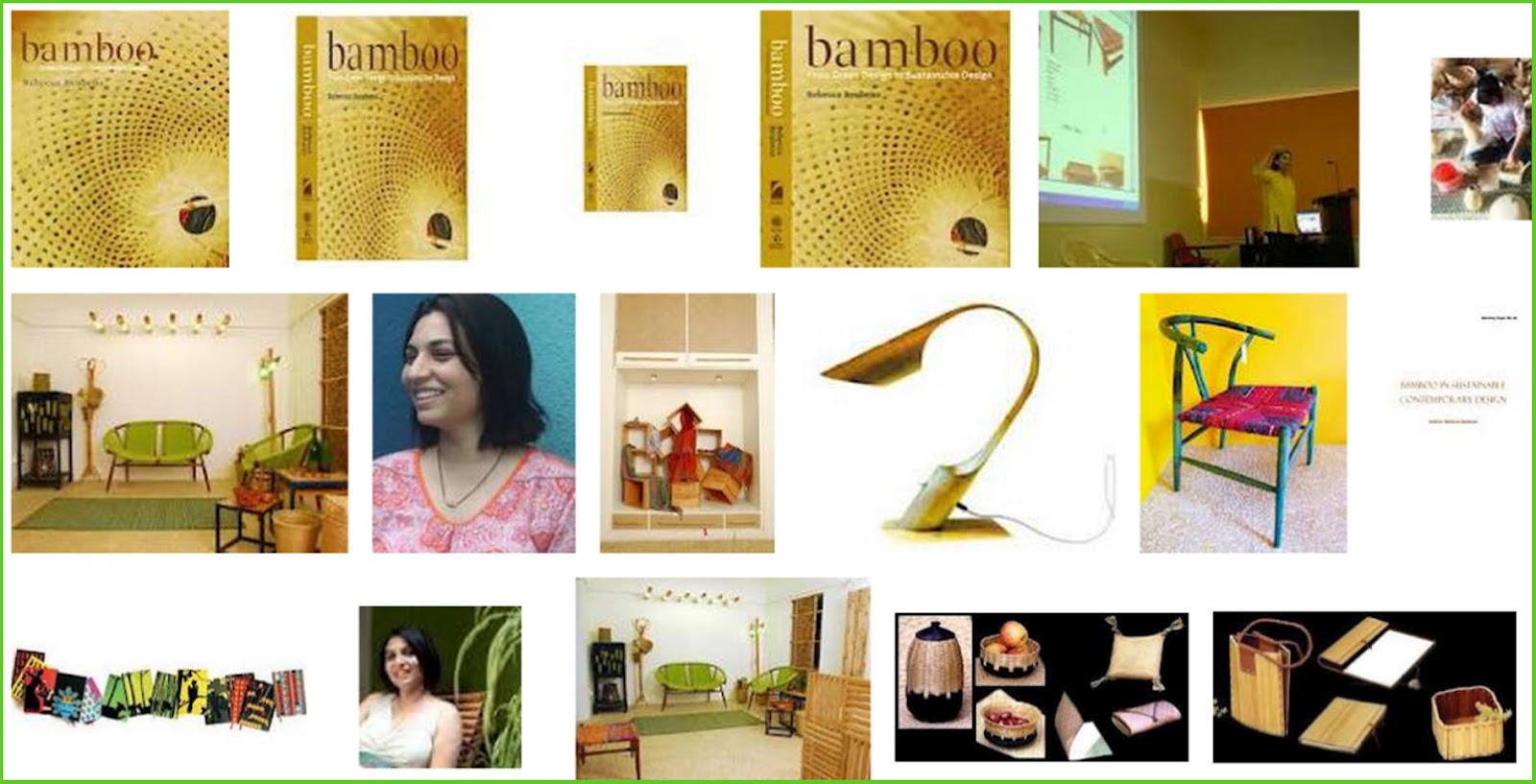
Rebecca Reubens: Bamboo – Sustainability – Design
Thứ Bảy, 11 tháng 8, 2012
Kerala State Institute of Design: Infrastructure and Directions in 2012
The Government of Kerala has taken a step that no other State Government has done so far, that of setting up a design school to address the needs of the region. The only other example that comes to my mind is the setting up of the Indian Institute of Crafts and Design (IICD) in Jaipur as a centre of excellence for creating change agents for the crafts sector using design as a core driver. This institute was set up by the Rajasthan Government based on a Feasibility Report for the proposed School of Crafts that was prepared by me as a member of the National Instituite of Design, Ahmedabad in 1993. In 2001 we helped redefine through our Feasibility Report, the role of the Bamboo and Cane Development Institute at Agartala to use design as a core driver for the bamboo sector of the country, as a sector specific institute that used design, technology and management in an integrated manner to get best results. Kerala too will need a forward looking vision statement in the context of our new understanding of design and the ongoing debates that have been raised by the mindless expansion that has been initiated by the DIPP, Government of India for the premier design education institute of the country, the National Institute of Design that led to a public outcry from groups of concerned design academics and professionals from across India through a new initiative called the Vision First initiative that has called for a serious rethink and wider discourse about the four new NID's that are proposed as part of their plans.
We now need a second meet on the proposed KSID's directions and this should lead to a clearly articulated vision statement that can help both Government of Kerala and the KSID functionaries to steer the institutes fledgling infrastructure as well as its new education programmes through the political channels of approval and public acceptance in the days ahead. Just yesterday evening, I was discussing the status of the KSID proposals with the members of the vision meet in 2009, Prakash Moorthy and Sangita Shroff, while having tea at the BMW at the NID Paldi campus and later last night I saw P T Girish's note in my mail box with the attached photographs of the KSID as it stands today. Another interesting coincidence is that I have just started teaching a course at the CEPT University for the Masters level programme at SID, the MIAD class on
Understanding Crafts and its Context in India where we have assigned the students three States to research, Rajasthan, Orissa and Kerala and they have an assignment to explore the use of local crafts in space making tasks that could be applied to the creation of a new holiday resort in their region. More about this course in another post soon. These connected set of events triggered this particular blog post and I hope that Kerala sets up a leadership position with the use of design for development and that this move will go well beyond what is needed in the crafts sector but also look at the needs for "Design across the 230 sectors" of our economy where design is critically needed but our political and administrative class do not yet seem to know this from the kind of support that design gets in the national and state budgets today. Can Kerala show the way? Only time will tell.
M P Ranjan
Thứ Hai, 23 tháng 3, 2009
Beyond Grassroots: CD ROM on Institution Building at BCDI
This CD ROM was produced in 2003 - 2004 using reports, movies and pictures that were part of the very detailed visual documentation that was maintained by the NID and BCDI teams using digital tools that were constantly available as a project policy. The intention was to build an Institute that could address the very complex needs of the “Grassroots sector” in rural India through the creation of human resources, knowledge resources as well as market linkages with the use of a potential local material such as bamboo which could be used to support a whole spectrum of development activities that could lead to positive change in the lives of the people. This CD ROM is available for download from this link here as a 560 mb zip file that unpacks into hyper linked folders and files all connected through a series of navigation screens shown below. We believe that India needs many institutes like this one if we are to transform our rural economy with the use of local resources in a sustainable manner and in a politically stable eco-system that can survive well into the future with the use of design, decentralized local governance and local entrepreneurship.Bamboo & Cane Development Institute, Agartala (BCDI): CD ROM as a live documentation of intentions and actions of the design team from NID, Ahmedabad in partnership with the team from BCDI, Agartala. – “Beyond Grassroots: Bamboo as Seedlings of Wealth”.
Prof M P Ranjan

Image 00: Feasibility Report for the setting up of the Bamboo & Cane Development Institute on the left and the two stages of BCDI Curriculum Development are on the right.
This institute was proposed in 2001 and experimentally managed by the NID team till mid June 2004 during which the curriculum development and many product design projects were carried out at Agartala. The Development Commissioner of Handicrafts commissioned this project as part of the UNDP funded National Bamboo Mission project and the project was handled by a team from the National Institute of Design, Ahmedabad as well as a team of faculty and staff at the BCDI, Agartala. These three reports show the articulated intentions and the process of curriculum development and these three reports can be downloaded as pdf files from these links below:
1. BCDI Feasibility Report: December 2001 – pdf file 366 kb size
2. BCDI Curriculum Structure – pdf file 4.7 mb size
3. BCDI Curriculum Review – pdf file 3 mb size
4. Achievements of BCDI: Summary - 2001 to 2004 – pdf file 789 kb size
5. Complete interactive CD ROM: “Beyond Grassroots!: Bamboo as Seedlings of Wealth – zip file 560 MB size

Image 01: This CD ROM opens with an introduction, which provides an overview of the resources as well as the intentions of the design team at NID.
The reader is guided to an index page shown besides the CD face image above which directs the reader to seven sub-indexes that go to access the full content of the CD ROM, mostly pdf files and reports, movies in QuickTime and brochures and publications prepared by the BCDI project between 2000 to 2003. The Seedlings of Wealth model was first articulated in 1995 as part of a paper by the author for the World Bamboo Congress at Bali, Indonesia that called for concerted action to study the fast depleting resource of traditional wisdom in the bamboo culture of the Asian region. This living resource is rooted in the local culture of the populations of Asia, Latin America and Africa and it is a major asset that can be used by development initiatives as a resource for sustainable development. Previous work done at NID on bamboo is introduced here through pointers to the book on the Bamboo & Cane Crafts of Northeast India (which can now be downloaded from here as a 36 mb pdf file) and the Bamboo Boards & Beyond CD ROM (which can be downloaded from here as a 550 mb zip file)

Image 02: The Introduction screen, the Main Index screen, and two of the seven sub-index screens are shown here.
The seven sub-index sections lead to a variety of resources that were either created as part of this project or were used as background resources to inform the thoughts and actions on this very interesting design initiative in institution building for the growth of the bamboo sector with the specific objective of addressing poverty and development needs of the rural sector with the use of design and local crafts skills. The Development Commissioner of Handicrafts Government of India supported this project through the funds available from UNDP as part of the National Bamboo Mission initiatives at the turn of the century. The support for the project continued till mid 2004 and the work done during the project phase is documented in the CD ROM mentioned above.

Image 03: Four sub-index screens dealing with Craft and Product development reports, Design and Bamboo shows, Systems Thinking project reports and the index for movies that documented 12 days at BCDI in May 2002.
The Craft and Product development reports were created as part of the ongoing product design explorations in bamboo and craftsmanship that involved NID faculty, students as well as BCDI faculty, students and craftsmen. Each project had individual goals and focused on one type of product be it furniture or domestic and office accessories that could be crafted in bamboo. Besides these reports we have also included Systems Thinking course outcomes for the NID Furniture Design programme where several batches of students were assigned individual projects in the area of bamboo and rural development initiatives with the use of this local resource. These explorations and the prototypes created are discussed in these reports included in this section. All these visits to BCDI were extensively documented using digital images. On one such visit to the BCDI the author made 12 mini movies using these digital still pictures and these movies are included in this section of the CD ROM.

Image 04: View of the Bamboo Boards & Beyond exhibit on the UNDP lawn in 2001 and a note about the CD ROM about that project shown alongside the crafts and bamboo shows available in the Beyond Grassroots CD ROM.
The Bamboo Boards and Beyond was a major project that preceded the BCDI initiative and has been discussed on this blog earlier. This image of the final exhibit at the UNDP lawns in New Delhi was not included in the previous CD ROM but it is included in this offering as shown above. This project helped open minds in Delhi and several National initiatives sprang from this particular event, which makes it significant for design for India.

Image 05: CD ROM face graphics and view of CD Jacket for the Beyond Grassroots, a joint CD publication from NID and BCDI.
While the CD ROM is available from the links on this page the CD Jacket can be downloaded as an A4 size printable artwork from this link here as a pdf file of 1 mb size. The BCDI Feasibility report was redesigned for print in a compact A5 format and the artwork can be downloaded from this link as a pdf file 368 kb size.
Prof M P Ranjan
Thứ Bảy, 28 tháng 2, 2009
Katlamara Chalo: Seedlings of Wealth in Action
“Katlamara Chalo”: A call for design and political action using the “Seedlings of Wealth” strategy for rural development in India.
Prof M P Ranjan

Image 01: A collage of images from the field workshop in May 2005 at Katlamara in Tripura State. A cultivated field of Kanakais bamboo at Katlamara, one of over two hundred such fields in the area. Nomita Debbarma with the DDPJoint and Nomita with Bani Urang at the drill machine set up during training sessions in summer of 2005. Samir and Ranjit the master trainers who worked with the design team in the field.
We first visited Katlamara in 1986 while on a project for the Government of Tripura and on that visit Gajanan Upadhayay and I found that systematic plantation could indeed provide high quality material for new applications of great value. We collected a few poles of “Kanakais” – Bambusa affinis – and brought these back to NID where they stayed dormant for several years but they also excited all of us and stimulated students to explore concepts with the use of this strong and straight rod shaped material. This provided grounds for our further strategies with bamboo and in my Bali paper of 1995 I had proposed for the first time my evolving conception of the farm to industry model for rural development using bamboo as a material driver which I later elaborated as part of the UNDP National vision report called "From the Land to The People: Bamboo as a Sustainable Human Development Resource for India". The six stage model for development proposed then was accepted by the UNDP in 1999 and the major initiative of bamboo promotion was started in India with UN funding being channeled through the Office of the DC(Handicrafts). You can read more about these interventions from my website at these links below:
1. Katlamara Chalo! Lesson in Rural Development
2. Bamboo Initiatives at NID
3. All bamboo joinery strategy

Image 02: Seedlings of Wealth model that was proposed in 1995 at the Bali Conference was implemented at Katlamara and the book about the field work and design strategies are now available between the folds of this cover, in a 64 page book titled “Katlamara Chalo: A Design for Development Strategy” (see link below or download 46.5 mb pdf file here).
In this book we have shared the process of how the farm to market strategy was developed through the various stages and how these concepts provided us with the background and conviction that the sustainable use of bamboo could bring economic sustenance to the local village farmers as well as to local bamboo craftsmen and entrepreneurs who depend on their craft as a source of their livelihood. The various prototypes that were developed as well as the strategies adopted by the design team are described along with numerous illustrations of the examples and the work in progress as a documentation report. Between 2001 January and June of 2004 we had the additional task of building a new Institute at Agartala called the “Bamboo & Cane Development Institute” (BCDI, Agartala) where we innovated a curriculum structure that helped train 160 craftsmen in the five batches that were conducted using our new curriculum, all involving NID faculty and research teams as trainers and catalysts in this education experiment. You can read more about the BCDI experiment at these links below:
1. BCDI, Agartala: A new Curriculum for Rural Transformation – Links to papers
2. Achievements of the BCDI, Agartala – Link

Image 03: Sample pages from the “Katlamara Chalo” book – illustrated pages that introduce the strategy as well as show the products and the story so far. Since this project in 2005 we have extended the range of products as well as conducted additional training for craftsmen from adjacent village clusters as part of the Tripura Bamboo Mission initiatives.
Design at the strategic level is not well understood in India or for that matter in many other parts of the world and in most cases almost all of the development success is attributed to the good use of science and technology and of management and planning skills while contributions from design are all but ignored. This is also reflected in the scale and frequency with which science and technology efforts and research are funded by our governments and in India the science and technology sector draws several thousand times more funding for development initiatives and the case for the use design is only considered if one of us, faculty from the design Institutes, happens to be present at some critical government or planning board meeting and we speak out in support of using design as a development resource.
The furniture development using the Katlamara bamboo for the rural development strategy is just one leg of a multi-pronged, multi-location and multi-year design and development effort that we have been pursuing at the NID Centre for Bamboo Initiatives over the years. We are pursuing this to show an even larger story that design at the strategic level (as we understand it at NID) can be a great and powerful force that can transform India if it is used in the 230 sectors in which it is needed but unfortunately which is not yet understood when compared to the manner in which with science and technology and management is understood in India. Many industrialists and government officials in control of development funding still think that design is a cosmetic addition to technology but this is far from the truth although the design media (in India and across the world) still seem to focus on fashion and aesthetics aspects of design and this I call "page 3 design" and I wish to promote the strategic design initiatives in India across all the sectors of our economy.
You can see Katlamara explorations as well as the range of furniture developed in 2005 at this link below:
1. Katlamara furniture workshop 2005 – Links and pictures
2. Download “Katlamara Chalo” book as a 64 page pdf file 46.5 mb

Image 04: A collection of products developed as a follow-up to the Katlamara Chalo Workshop. The Dismantling and stackable tables, benches and storage racks are based on the component stackable configuration developed by Sandesh R using the Katlamara Bamboo Joint using the DDP strategy.
This is an ongoing engagement and after the project in 2005 we have had the occasion to revisit the project location as well as collaborate with a number of partners in furthering our objectives of providing development interventions using design strategies of product diversfication and matching these to local capabilities as well as aspirations. In recent times we have a major project with the Tripura Bamboo Mission where we helped develop a new collection of products that could sustain local markets and these were introduced to local craftsmen in an effort to seed local entrepreneurship based on local demand. This “local to local” strategy saw the design team focus on one product category called the “Alna” a local favorite, a clothes rack, which is found in every home in the region, but is rarely made in bamboo. I have reported about this collection in a recent post which can be seen at this link here.
1. Tripura Bamboo Mission workshop at Bangalore – Link
2. Bamfest show 2006 – Sandesh R and M P Ranjan collection – Link and pictures
3. Bamboo Initiatives products catalogue – Links and pictures
Download related papers, reports and books from here:
1. Ecology & Design: Lessons from the Bamboo Culture, Oita, 1991 – (202 kb pdf file)
2. Green Design & Bamboo Handicrafts: A scenario for action in the Asian Region, Bali, 1995 – (pdf 217 kb)
3. From the Land to the People: Bamboo as a Sustainable Human Development Resource, New Delhi, 1999 – (pdf 1.5 mb)
4. Rethinking Bamboo in 2000 AD (text file), Haikou, Hinan, 2000 – (90 kb pdf file)
5. Rethinking Bamboo in 2000 AD (visual presentation), Haikou , Hainan, 2000 – (8.7 mb pdf file)
6. BCDI: Feasibility Report, New Delhi, 2001 – (371 kb pdf file)
7. Achievements of NID-BCDI, Ahmedabad, 2004 – (21 kb pdf file)
8. Bamboo Initiatives Catalogue: Design Strategies from NID-BCDI, Ahmedabad, 2004 – (16.6 mb pdf file)
9. Traditional Wisdom: Bamboo & Cane Crafts of Northeastern India, New Delhi, 2004 – (34.7 mb pdf file)
10. Katlamara Chalo: A Design for Development Strategy – Design as a driver for the Indian Rural Economy, Ahmedabad, 2007 – (46.3 mb pdf file)
11. NID Bamboo History: A Slide Presentation – 1969 to 2009 – (22.4 mb pdf file)
12. UNDP Lawn Exhibition, New Delhi – February 2001 – (540 kb pdf file)
Prof M P Ranjan
Chủ Nhật, 27 tháng 4, 2008
Centre for Bamboo Initiatives at NID (CFBI-NID): News in 2008
Centre for Bamboo Initiatives at NID (CFBI-NID)
A brief report for Academic Year 2007 to 2008
1. Bamboo & Cane Development Institute:
Governing Council meets at Agartala in June 2007 and March 2008. Prof. M P Ranjan attended the Governing Council meet of the BCDI at Agartala in June 2007. The Institute that was set on a new curriculum and infrastructure plan is now being managed by the Office of the DC (Handicrafts) Government of India.
Download BCDI Reports listed below:
1. Achievement Report 2004: NID-BCDI – pdf file 21 kb
2: BCDI Feasibility Report December 2001 – pdf file 371 kb
3. BCDI Curriculum 2002 - 2004 – pdf file 3.9 mb
4. BCDI Curriculum Review 2004 – pdf file 3.0 mb
2 Bamboo Products Exhibition in Germany:
The Ifa-Gallerie in Stuttgart, Germany hosted an exhibition of selected Interior Designers from India as part of their “In Site –Indian” exhibition where five bamboo prototypes representing five collections of designs developed by the NID teams were on display for two months. The exhibit moved to the Ifa-Gallerie in Berlin before being returned to India in October 2007. :more about the Exhibit:
3 Tripura Bamboo Mission:
Prof M P Ranjan continued as advisor to the Tripura Bamboo Mission (TBM) through the year and visited Tripura in June and December to attend the meetings of the Tripura Bamboo Mission that is being managed by the State Government with the aim of reaching bamboo based development strategies to remote districts of Tripura. :more about TBM:
See the Katlamara Chalo website links here and download "Katlamara Chalo Documantation: Rural Development Strategy Report" as three part file below:
1. Katlamara Chalo: Background and Macro-Micro Design Strategy – 12.3 mb pdf file
2. Katlamara Chalo: Product and Technology Strategy – 15.6 mb pdf file
3. Katlamara Chalo: People and Application Strategy – 18.8 mb pdf file
4 IL&FS collaboration under the Tripura Bamboo Mission

In December 2007 CFBI-NID signed a “Statement of Intent” to assist the IL&FS and the Tripura Bamboo Mission by providing design supports and expertise in a collaborative mode. This SOU was signed in the presence of the Chief Minister of Tripura and follow-up meetings have taken place in New Delhi and Ahmedabad based on which NID Outreach Department has submitted a detailed proposal for a training cum entrepreneurship development project that is based on the CFBI-NID collection of designs as well as new student diploma projects that would be taken up in the current academic year. The project will commence in May 2008.:more about IL&FS projects:
5 CBTC, Guwahati MOU operation:

Due to lack of funds the MOU with the CBTC, Guwahati is lying dormant during the academic year 2007 – 2008. In the previous year CFBI-NID had participated in a National Exhibition at the Pragati Maidan as well as contributed to the Bamtech Conference and Festival organized by the CBTC in Agartala in December 2006 as part of this ongoing MOU. Discussions have been initiated with the National Bamboo Mission to obtain funds to set up a design centre in Guwahati in partnership with the CBTC and wit the support of the NEC, Shillong.:more about the CBTC, Guwahati:
6 Collaborative projects with IPIRTI, Bangalore:

Prof M P Ranjan had meetings with scientists and the Director of IPIRTI, Bangalore to explore collaborative projects in areas of mutual interest in the bamboo sector. The IPIRTI is located next to the NID Bangalore Centre and the Bangalore Centre faculty too has shown interest in exploring the application of bamboo mat boards and laminates in the Retail Sector as an eco-friendly substitute to wood and wood based materials. Further the area of low-cost housing is another area of focus where the collaboration could provide synergy between NID design expertise and IPIRTI technology expertise. IPIRTI has excellent facilities for prototype making which would be an asset that NID students and faculty can use as part of the collaboration that is proposed. Project proposals have been discussed and are in the process of being finalized.:more about NID IPRITI initiatives:
7 Training programmes and resources for crafts entrepreneurs:
A number of training programmes for various groups of crafts entrepreneurs has been organized by the Outreach programmes at NID under the ICIC activity centre using the design collections that have been developed by the CFBI-NID activities. These can be given an impetus to reach further through publications and web based sharing, which is being explored during the current academic year.:more about NID Bamboo Intiatives:
8 Bamboo based co-creation initiatives in South Gujarat:
The State Government of Gujarat has shown interest in using expertise in a number of development projects in South Gujarat. Prof M P Ranjan attended a number of meetings of the Gujarat Bamboo Mission as well as held discussions with the State Tribal Development Department and an NGO called Eklavya Foundation to leverage NID design and bamboo expertise for development initiatives in South Gujarat. Proposals are being developed with the Outreach activity to get student involvement in these proposed projects. State Government is interested in setting up new Institute for rural development in South Gujarat, which would be part of the ongoing discussions with the partner agencies to initiate sustained development.:more about bamboo and rural development:
Download UNDP Vision Report 1999 from link below:
From the Land to the People: Bamboo as a Sustainable Human Development Resource – pdf file 1.5 mb
9 Collaboration with other States and with other agencies and future projects:
The CFBI-NID continued to receive requests for information and expert supports for a variety of initiatives being carried out by other States as well as Institutions at various times. We have shared digital resources and publications to seed the continued research activity across various regions of India and this collaboration although it does not bring in immediate financial gains it has generated a lot of goodwill and opened up opportunities for future collaboration. In this effort we are in touch with the activities in Uttaranchal (Uttarakhand), Karnataka, Kerala and Orissa. Several schools of architecture have shown interest in sending their students for field training and research which will further the larger goal of bamboo based development in India.:more about bamboo initiatives at NID:
10 Publications: Books, CD and Web based resources for development of bamboo sector in India:
The CFBI-NID has plans to create and produce a number of print as well as digital resources that will help disseminate the vast design resources that have been generated by the various teams of faculty and students as part of the broader development agenda of the bamboo sector which is a very critical rural development as well as employment potential activity for rural and urban crafts communities. The research effort that started in 1978-79 that resulted in the publication of the comprehensive book titled "Bamboo & Cane Crafts of Northeast India" has been followed up with numerous reports and design catalogues that were made available as CD-ROMs and digital files online. Download the book in pdf 34.7 mb here. These proposed publications will help fast track the flow of critical knowledge resources for the development of the bamboo sector as well as act as an example of how the use of design can facilitate sustained development in other sectors by example. We will be exploring the sourcing of funds to support this activity in the current academic year.:download bamboo and design papers from this site...more to come:
Thứ Năm, 3 tháng 1, 2008
Poverty and Design: Concerns for the design policy implementation in India
Image: Exploring design opportunities in the supply chain of dairy products with a focus on achieving social equity. Model was built by a group of students as part of the DCC course at NID Bangalore Centre to examine the structure and possibilities that were afforded by the sector.Many approaches used in India seem to me to trivialize the whole matter of "wicked problems in design" (as defined by Horst Rittel) and place design far below planning and economics in many ways and this may need to be corrected through a better understanding of design processes as well as what the discipline can be asked to do. While everyday dilemmas that stem from inequity and prolonged poverty situations in our country these are talked about as everyday rhetoric within the framework of politics these are indeed "wicked problems". This statement is true in as much as our not being able to find any adequate solution in spite of many years of planning and from whichever angle you may approach it, we must admit that there are those "truly wicked problems" since they are a challenge that defy simple solutions. These kinds of problems are indeed in desperate need for design thought and innovative action, if we are to find any solution at all, but design however is rarely called upon for finding solutions for such problems in India, except in certain limited areas such as finding new applications for local craft skills in the handicrafts sector or the preparation of smart graphics for some lost cause that is in need of mobilizing either funds or public support. Yet another avenue is the channel of corporate social responsibility where guilt funding is mobilized from industry to address some limited objectives in education, vocational training or subsistence support through a combination of planning and grants through macro schemes that produce doubtful results in any case, but guilt is redressed since something was done in a fit of helplessness.
Image: One of the many scenarios created by students in the Design Concepts and Concerns course last year dealing with the design of micro-enterprises for self-help groups.I am generally optimistic about the ability of the serious and committed design user – be they the entrepreneur, administrator, professional or student, and not just the trained designer – to be able to use the tools and concepts of design that we have gleaned over years of reflection and use in a manner that could be effective particularly where many of our traditional planning and macro and micro economic processes seem to fail. In my view these failures may be primarily due to an absence of innovation that are integral to the planning processes and the very absence of the use of design imagination since design is not yet on the national agenda unlike science, technology and management. Here I see a critical role for design thought and action to be mobilized in the arena of poverty alleviation processes by addressing the ability of rural and urban poor in the process of getting out of poverty themselves and being able to stand on their own feet with their dignity and self-esteem intact. This particular concern has been articulated with a great deal of clarity by L C Jain in his SEMINAR paper on globalization where he draws on the lessons of Gandhi as a way forward for setting planning (and design) objectives for India as well as for others with similar problems at places across the globe. A tall order, but I believe one which is do-able.
It is with this insight that I have been including the macro-micro perspectives inside design education particularly when we are introducing students at NID to design thinking as part of the Design Concepts and Concerns course that I teach at the design school in Ahmedabad, and now in Gandhinagar and Bangalore. Last semester, in Bangalore we asked the group of students to examine the design opportunities in the supply chain of large and local retail operations so that they could enhance the social equity aspects of the exchange which could be made to go in favour of the poor in an equitable manner and in a spirit of fair trade. Besides the skill building and sensitizing assignments that come from the traditional basic design courses we have been looking at expanding the vision and sense of concern for both environmental sustainability as well as to deal squarely with the pressing issues of social equity in the basic objectives of design action in numerous sectors of our economy. The threat and perception of global warming and climate change have now been taken quite seriously as a major area of focus in design education. However social equity and making an impact on poverty alleviation is yet to find a core space as a serious area of focus in many design projects done by design students, particularly since we are unable to find effective sponsorship for those who wish to pursue these objectives on their own initiative. It is here that we will need to use government development challenges to chanalise design inputs to those who need it the most but cannot afford to mobilize on their own volition. Design is a natural human ability and if we were to let people use it themselves, this too may be a solution as I have tried to argue in my IDSA presentation last year in Austin Texas, titled "Giving design back to society: Towards a post-mining economy", which can be downloaded from my website at this link here: (this link downloads a pdf file 812 kb in size)
What I have learned about poverty over some years of trying to address their solutions through the use of design in many parts of India and in quite varied situations is that planners and economists here do not seen to have a clue about how this can be rooted out altogether although huge sums of money and political fire power is expended with this as the stated objective of both governments as well as the non-governmental sector which is quite active in India and some of these have done remarkable work with and without the use of design.
Jeffrey Sachs in his book "The End of Poverty: How we can make it happen in our lifetime" offers his insights about how one can use economics and policies to move forward but unfortunately the word design is not in his lexicon while innovation is mentioned in passing without much depth or discussion, which I find hard to understand. However I see this as symptomatic of the view taken by many of the worlds' statesmen and administrators who keep grants and aid at the top of their agenda and with very little or almost no emphasis on design as a way forward in such situations, and I believe that they do not have faith that design can indeed solve such "wicked problems".
When we were working on a new curriculum for the setting up of the BCDI, Agartala (Bamboo & Cane Development Institute) that had a mission of addressing the problems of poverty and development in the Northeastern Region of India using bamboo as a resource we looked at the various parameters that would be needed to bring about lasting change in the condition of the local farmers and bamboo craftsmen of the region. From our explorations we did find the creation of new products as a way forward using innovation to generate value. But far more that that we discovered that the people who had lived in poverty and economic and political subjugation for a long period need far more than mere education in skills to make these new products but we felt that they needed a mindset change that could only come from a growth of self-confidence and in a form of "cognitive expansion" which is the term proposed by my colleague, Rashmi Korjan, when she helped me on the curriculum development task at the BCDI in 2001-02. Our experiments at the BCDI, it seems, became politically potent and we were not permitted to continue our work at the Institute by the officials who found all kinds of excuses to scuttle our intentions. Some of this design work and the curriculum development and its application over the two and a half years in which we managed the Institute are available at my website and on my blog, "Design for India" (here) and more will be added in the days ahead.
The hallmark of our new curriculum for craftsman in the bamboo sector and I believe for all our rural poor would be a mix of skill and useful abilities with a good measure of confidence building and "cognitive expansion" that only good and wholesome education can bring to these affected people. We are continuing to address these pressing problems and they are as "wicked" as they come, but the faith that design can answer many of these due to the integrated nature of its offering is still lost to the government and political leadership and we must find ways to change this lacuna sooner if not later.

The problems that I speak about is not unique to India and I find that the discussion raised by David Stairs on the Design Observer blog in his comments about the Cooper Hewitt Exhibit "Design for the other 90%" and another post there about the "Project M" raises important issues about the use of design in such pressing circumstances which are quite ignored by most design schools except for appearances in competitions and conferences, in a very superficial manner. Dori Elizabeth Tunstall has raised another aspect of this debate on her blog as well, and I am in full agreement with her and with David Stairs, although my critique may take other examples in the ambit of our larger debate. The Index Awards were announced in Copenhagen in August 2007, which is very prestigious and very rich by any global standard. However my question is, does this event represent the current global understanding of the "Design Way" as expressed by Nelson and Stolternman if we take the Nobel Prize as a benchmark for achievement in the sciences and in economics? Is there another level that Design can offer beyond the debate that was set of in the mid 70's by Victor Papanek? Some of us living in the "Real World" may feel that there is still a way to go before we can see the light.

I would love to see some sustained debate on these matters as well since so many design users are experienced and come from so many fields that impinge on design research, and design action. I have recently made a post on the durable contribution of the Eamses in India on my blog and also about the many exciting explorations that are taking place across the world in a search for directions and strategies that can be used to address the "wicked problems" of which we have in huge measure in India and all readers of this blog post are welcome and share in this huge design opportunity. The "real world" is a "wicked place" as we can all see that even in Hale County, Alabama, located as it is in the worlds richest country, poverty is not located in the South alone. So it is clear, that this is not a South-South problem as the UN agencies would say in their diplomatic parlance. It is a global problem and we need to explore the use of design in addressing these classes of problems and our policy initiatives must take cognizance of the role design and innovation can play in these kinds of problems. The National Design Policy and its implementation is a good place to locate this debate and an appropriate avenue through which these applications of design can reach those sectors and areas that need and can benefit from the use of design in the empowerment of people in their attempt to get out of poverty with dignity and a sense of self worth.
Design for India: Posts that are linked in content and intent to this one:
• The Eames impact on India:
• The NextD Institute, New York:
• The Creative Economy for India:
• The Mayo Clinic and Design for Medicine:
• Design Concepts & Concerns Course blog
Thứ Năm, 20 tháng 12, 2007
Bamboo Mat Boards from IPIRTI: A material waiting for innovation
Image: NID team at the IPIRTI’s 5 year old demonstration bamboo house.The Indian Plywood Industries Research and Training Institute (IPIRTI) is located just across that road from the NID R & D Centre in Bangalore. The IPIRTI was set up in 1962 as an autonomous society registered in Karnataka and its major stakeholders are the Ministry of Environment and Forests and the plywood and panel board industries that are its members. It offers education and training programmes in wood and plywood technology as well as conducts research in a wide range of technology and application areas dealing with a host of wood and wood derivatives including plywood, particle boards as well as fibreboards and a number of other composites aimed at particular applications. The Bamboo Mat Board was one such significant achievement of the IPIRTI.
Image: NID team at the two-story bamboo house at IPIRTI.In 2001 the IPIRTI set up that Centre for Bamboo Development at its main campus in Penea to explore and conduct research into new and valuable applications using bamboo as a sustainable material for the future. Bamboo is a very commonly used raw material in India for local housing and for the production of a very large range of traditional products particularly in, but not restricted to, the Northeastern Region of India.
Image: The two-story bamboo house at IPIRTIOur own book titled “Bamboo & Cane Crafts of Northeast India”, M P Ranjan, Nilam Iyer & Ghanshyam Pandya that was published by NID and DC (Handicrafts) in 1986 was based on fieldwork conducted by the author and his team in 1979 to 1981. It documents hundreds of bamboo products and structures from bridges, houses, baskets and household appliances all made with bamboo as a primary material. This book was reprinted in 2004 as a resource for Traditional Wisdom from the communities of the Northeastern Region of India. Starting with this massive documentation that was done with a design intention of trying to understand the traditional material as a source for new and contemporary applications that could create employment and business opportunities for the people of the Northeast we went on to explore numerous product applications in our continuing journey of research and design explorations at the NID and the Centre for Bamboo Initiatives at NID. A low-resolution pdf file of this book can be downloaded from this link (pdf file 34.7 MB) here.
Image: NID team examining the finger jointed board at the IPIRTI test labThe Centre for Bamboo Initiatives at NID has over the past several years explored and published a very wide range of applications and a number of approaches for using the bamboo species available in India. These explorations can be seen at these web links here: Bamboo Initiatives, Bamboo Boards & Beyond, BCDI Agartala, and Katlamara Chalo – to name only a few. In all these explorations we have created several hundred new product designs and through the Bamboo and Cane Development Institute (BCDI) at Agartala we helped train hundreds of master craftsmen who could disseminate the design collections to other crafts communities. (download file “Achievements of BCDI” as a MS Word file 736 kb from here. The Bamboo Initiatives catalogue too captures this range in summary that can be visually appreciated and the reports on the BCDI, Agartala would give an idea of the objectives of the institute as well as the curriculum and training strategies that were explored there. These reports can be downloaded as pdf files from these links below.
BCDI Feasibility Report, 2001 (pdf file 372 kb)
BCDI Curriculum Structure, 2004 (pdf file 3 MB)
BCDI Curriculum Review, 2005 (pdf file 4.7 MB)
Images: The modular bamboo mat board house at IPIRTIThe IPIRTI on the other hand has been active in bamboo for many years particularly in the creation and popularization of the bamboo mat board that is made from hand woven bamboo slivers that are then pressed in a plywood press and several layers of mat are impregnated with resin to create a very strong and useful sheet material. While the technology for the bamboo mat board has been available on the market for several decades now it is still to gain wide acceptance as a major material in a number of product categories that it could be used for. This is what brought us to IPIRTI yesterday from the NID Bangalore R & D Centre. My colleagues Sushanth and Sashikala accompanied me on our visit to the IPIRTI and we met the Dr C N Pandey, Director IPIRTI and his colleagues Jagadish Vangala and K Shyamasunder who took us around the campus and gave us a preview of the bamboo based houses that they had built to prove the concept. While these are technically and structurally sound demonstrations they are far from perfect from an aesthetic and functional standpoint. It is here that we feel that collaboration between the scientists from IPIRTI and the design teams from NID could make a great deal of difference. Since the NID Bangalore Centre has commenced PG programmes in Design of Retail Experience we proposed that the first project could focus on exploring new and exciting applications for bamboo mat boards in the fast growing retail sector. The Indian Retail Sector too needs to desperately reduce its carbon footprint and the use of bamboo in a sustainable manner can contribute positively in this direction.
Image: NID team at the workshop in the IPIRTI, Centre for Bamboo DevelopmentThe CFBI-NID and the IPIRTI are therefore exploring areas of cooperation that could be mutually beneficial and set up a platform for sharing knowledge and expertise that could bring out exciting new results that can make the quality of the mat boards both visible as well as attractive to the retail sector and to the broader market in the days ahead. Housing and modular architecture would be another area of cooperation that will be explored in the days ahead.


