Thứ Hai, 15 tháng 9, 2008

Economy: progeCAD users enjoy savings against high price of AutoCAD

Once resorted to only by smaller businesses needing basic DWG CAD compatibility and AutoCAD commands for 2D technical drawing, progeCAD is now making gentle inroads to larger companies. "Great! This (progeCAD) delivers just the right level of features for a fractional price of what one copy of (AutoCAD) LT costs us..." wrote one office in Australia. "I sorted all our guys with progeCAD without capital expenditure" laughed another.

A downturn in the economy and the rising cost of new licenses for corporate brands like AutoCAD and Microstation have some department heads scrambling to find affordable CAD software that still gets support. Still, the new trend of larger companies toward progeCAD surprises some. It was only a few years ago that the program still suffered issues to edit large files (in excess of three megabytes) and snap to points within nested AutoCAD blocks. As progeSOFT continues to improve their flagship product, end users are enjoying the benefits of what many now consider to be their CAD of choice for money.

Schools benefit the most. They get theirs free. When CADDIT first announced the progeSOFT educational program in Australia, it was quiet. Then slowly interest started calling - TAFE, universities, public and private high schools. Now CADDIT.net receives new educational requests on pretty much a weekly basis.

CADDIT is an international partner of progeSOFT, Italy, specializing in the English or German language product sales and support. Users and companies from any country can download free or register progeCAD and choice of support plans directly online. For full corporate progeCAD site license requirements, the best options is to contact CADDIT directly. Current progeCAD 2008 Professional users can expect at least one, if not two more free minor support upgrades this year. These minor upgrades are mostly patches to enhance and sometimes fix existing functions. progeCAD 2009 is still many months away.

Thứ Bảy, 13 tháng 9, 2008

Exhibition Design at NID: A reflection on Design Education for India

…Design for India…

Image: Three major exhibition design projects from the NID documentation of 1964 to 69, the Nehru Exhibition (Eames - 1965), the Osaka Theme Pavilion (Frei Otto – 1969) and the Gandhi Darshan Exhibition (Dashrat Patel – 1971) all commissioned by the Government of India to promote the national agenda. Download NID Documentation 64-69 as a 25 mb pdf here


Exhibition Design at NID: A reflection on Design Education for India
Multidisciplinarity is sometimes used as a slogan to show that design is complex and that many different skills and knowledge areas would need to be accessed in order to solve a particular messy issue but this is rarely done in practice since this is politically a very difficult task of negotiation and coordination. However when filmmakers and media designers work to deliver complex messages in the medium of both film and exhibit design this is perhaps the only way that it can be done effectively. An exhibition or a museum is a complex but coherent message that is delivered in space and or time – through the use of many devices – and at NID we have had a huge legacy of experiences that we could draw upon from the numerous projects that were conceived and executed over the long period of over forty five years beginning from 1964. I wrote a paper in 1986 about the lessons from the various exhibit design projects done at NID and this was in the context of a conference on design of crafts museums held at Pragati Maidan in New Delhi. This paper can be downloaded from here as a word file: Exhibit Design at NID

Starting with some early projects for the Space Applications Centre and some Textile Mills at Ahmedabad in the early 60’s the first major exhibit to be assigned to NID was the Nehru Exhibition. Charles and Ray Eames designed this exhibition with their office team working along with the young NID team at Ahmedabad. The Eames Office teams located themselves at NID for a few months while the research and design of the exhibition involved the young NID students who learned on the job from the world masters. These students were the first batch of Graphic Designers being trained at NID who later became the first faculty group of the Institute. The Nehru Exhibition traveled the world and I too was involved in these projects in New Delhi in 1972 and later in Santiago, Chile in January 1973 and much later in the early 90’s when it was set up once again as the much enlarged and permanent “Discovery of India” exhibit at the Nehru Centre in Bombay. All these projects were done by the faculty of the time and students from several disciplines were involved as project associates, each with a specific design assignment from which they could learn by doing. “Learning by doing” was the slogan of the day and frequent project meetings ensured that all members got to learn about the problems and achievements of all the other teams that were handling the diverse tasks to be completed in time and at the highest quality standard, insisted upon and set by the international consultants as well as the faculty teams at NID.

Such projects in those days brought in the money needed to experiment freely with expensive materials and tools within education and the Institute would be buzzing with activity through the day and the night when deadlines got tough and the learning was taking place in a rich soup of activity and dialogue associated with these projects. These experiences also brought in many specialist experts such as copy editors, photographers, typographers, calligraphers, artists, illustrators, lighting, media and structure experts, all masters in their respective field, and their visits to the campus as well as at work locations in many fabrication shops where the various exhibits were being fashioned gave live exposure and experience to the students, and all of this was based on the design schemes proposed by the teams from NID.

Image: NID's heritage campus as seen from the lawns was the scene of all the activity mentioned in this post. Today two new campusses have been set up at Gandhinagar and at Bangalore.


In the late 70’s exhibition design was offered as a discipline for the SLPEP Programme which was then five and a half years duration with a one and half year foundation programme. Dashrat Patel headed and conducted the discipline with Pradeep Choksi as his faculty assistant during the first few years, but whenever major exhibition projects came into the Institute, students from all disciplines were involved as team members and everyone got the multidisciplinary exposure. The landmark projects handled in this period included the Our India Pavilion in the 1972 IITF Trade Fair with huge multi-screen projection systems executed with technical and multimedia experts from Czechoslovakia, the Textiles of India Pavilion for the Ministry of Textiles and the Nehru Exhibition, all of which opened on the same day in New Delhi in November 1972. The first batch of NID’s SLPEP Undergraduate students were all involved in these three projects and the learning was truly through the doing as was professed in those days as the educational philosophy of the Institute. The exhibition design education programme was suspended for a few years and then offered again through popular demand from students wishing to explore several materials as well as media, message, structure and form. The exhibition design programme flourished under the leadership of Vikas Satwalekar who took personal interest in the activity while he was the Executive Director of NID from 1988 to 2000. Included in these is the Rta Rtu exhibit for the IGNCA in New Delhi and the Discovery of India exhibit in Bombay besides a regular education offering at NID and a rich crop of graduates from the discipline, all with great leadership that was revealed by their work in the field since then.

The major projects handled in the early days included the Agri-Expo in 1977 under Ashoke Chatterjee’s leadership, the Manipur Pavilion and the DST Pavilion in 1981, Energy Exhibition in 1983, and the Commonwealth Institute Exhibit in London during the Festival of India in the UK. The other period of major projects included My Land My People for the Festival of India in the Soviet Union under the leadership of Vinay Jha between 1985 and 1988 when he was the Executive Director of NID. Two major museum design projects were already under way when Dr Darlie Koshy took over as the Executive Director of NID in 2000, the major museum project for the Reserve Bank of India and the Khalsa Heritage Museum for the Government of Punjab. While the first museum was completed and delivered in Bombay as a very high quality offering the second ran into political trouble of many kinds. However, the Khalsa project ran into all kinds of delays and the project has now been handed over to a team of NID graduates who are now completing the project since both Vikas and Suranjana Satwalekar moved out of NID after his retirement as a member of the NID faculty. However NID shifted its focus from “hands-on” production of exhibits to outsourced production and student involvement in these projects dwindled to a very small and infrequent involvement due to policy changes in education and professional practice at NID. The “Hand-on Minds-on” slogan that I had coined – for our bamboo based elective using three species, kanakais (affinis), strictus and giganteous, each from Tripura, Madhtya Pradesh and Karnataka respectively – in November 2003, which was later borrowed and adopted wholesale by the institute across many of its publications and external communications. However, in the real actions that followed the slogans, the hands-on seems to have lost out to an intellectual research focus, which saw the workshops at NID shrink in size, and activity and the student population soar in numbers across all the specialized disciplines at NID. Exhibition design once again stuttered from lack of conviction in the multidisciplinarity being at the core of design education and many narrow specialisations were launched in the claim that these would bring greater depth of research to the specific fields. Only time will tell if this will happen and I have my doubts, which I have expressed at many occasions.

We need to review the design history of our exhibition design education and practice and draw the lessons from these experiences since they were not just professional projects being carried out in a pure design office but they were truly rich training grounds for young design students who were exposed to live experiences across a multidisciplinary environment in a climate of high motivation, optimism and a high quality commitment. This kind of learning is unique to NID since professional projects were brought into the classroom and these tested the mettle of both faculty and students alike. It is not surprising that so many of our graduates occupy leadership positions in their careers across many sectors of the Indian economy and we should use these reflections to see how design education can and should be strengthened in a live manner in the days ahead. Unfortunately, as with so many other design schools around the world NID too suffers from a lack of process documentation of its work and experiences. This may be a good moment for us to rally our faculty and students as well as those who have recently retired from service to try and use the web based platform to document and garner all these experiences in a way that will give us insights that would help shape the future of design education when India is finally recognizing the need for this kind of training and the national policy is geared to set up several schools all over India. What models should they follow? Surely not the route followed by the schools of architecture and technology but perhaps that which has been adopted by the schools of medicine where practice is at the heart of education, “Hand-on Minds-on” all the way. Yesterday two students met me in my office to ask me questions about the history of the NID’s exhibition design programme and in my response to their questions many insights and experiences flashed through my mind, which has led to this paper.

Next week NID is organizing a very interesting meeting under the leadership of Gira Sarabhai who from her museum design and management experience coming from the setting up and running of the Calico Museum of Textiles in Ahmedabad has asked NID to explore the need and structure for a proposed new programme on the conservation and management of the textile and museum heritage of India. Aditi Ranjan, Head of Department of Textile and Apparel Design at NID is coordinating the meet on the 18th and 19th September 2008 with international and national experts meeting together with design educators and this I am sure is a great opportunity to reflect on the NID experience in museum and exhibition design. I will unfortunately miss this event since I will be on my way to Bangalore for my two-week course in DCC for the NID Bangalore students as well as our bamboo project for the IL&FS and the Tripura Bamboo mission for whom we are conducting at the IPIRTI campus located across the street from the NID campus. However I do hope that the meeting will sift through the vast NID experience and integrate this into a rich palette of inputs and insights for the future of design education in India.

…Design for India…

Thứ Tư, 10 tháng 9, 2008

Testing the Biscuit: High Tension on the Gatineau River.


Old Man River Workin' on the Clean

Back on the blog again. Still trying to fill you all the way in on the trip to Canada where we were testing the Biscuit. Like I said before the water was not ideal for the big stuff on the Ottawa but the smaller playspots were on. So it was a great testing for that. But we were getting a little concerned that we wouldn't find a nice big wave for us to really check out its big wave potential. And then we got the call from Guillaume. High Tension Wave was coming in on the Gatineau River. Marlow's eyes were lighting up and non of the rest of us had ever paddled this wave but I had seen tons of photos and videos from the spot so we knew it would be good but we didn't realize how good it would be.


Yep its that good

But first lets get some good old fashioned Canadian culture under our belts. We were traveling in the middle of no where and this kayak drew us in. We didn't really know what it said but we did see the sign for Poutine. If you don't know what it is then you need to go to Canada just for a paddling trip and check it out because just like the paddling it is decadent, rich, basic, carnal, and heavenly all in one fell swoop. First you take french fries which we all know so well, then you throw on top some cheese curds (the white stuff in the photos), and then, why not, toss some gravey over the whole thing. In fact I am embarrassed that someone in the south didn't come up with this one first. Poutine, yes, is grits, biscuits, sausage, fries, moonpies, rc cola, and humidity all rolled into one. Its the bomb.


Parle Francais?


See if you understand the menu


Mmmmmm so much goodness in one place


Yonton in a state of lovin' it


It looks like heaven to me

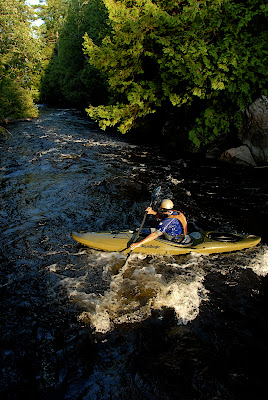
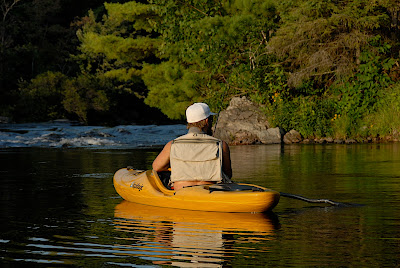
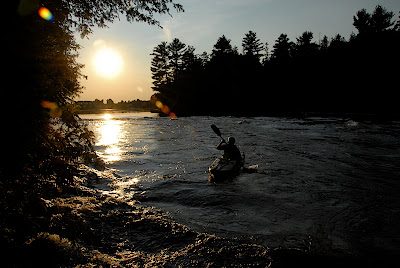
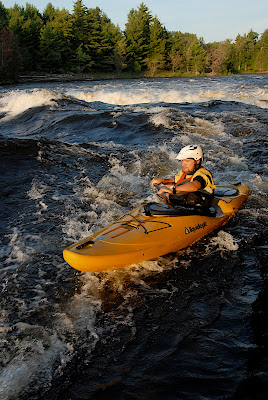
Oh yeah back to the High Tension Wave on the Gatineau River. Lets just say 6 feet high, smooth and glassy, eddie service if you are on it, and it you aren't there is an eddie with a 60 second portage back to the wave just behind the next rock. Theres a pile to land all your tricks in if you can't land them clean. The good folks can stay on this wave to seemingly forever, the front surfers can stay on this wave to eternity and yep the Remix XP can surf it as well.


Marlow cleaning it up


Mar trying out another color


backwards, fakie, switch, whatever... clean


ollie off the rib

So obviously this was an amazing place to test the big wave ability of the Biscuit. We are maybe half way through the process of testing this boat out and things are looking really good. The first proto showed that the boat needed a trim in volume to balance the boats out. While I was in Colorado I was able to paddle in several awesome spots during the high water season but most notably was the Glenwood wave all the way from about 12 grand up to nearly 21 thousand. We also paddled it on big water on the Arkansas River. The Salida hole was working, and the Numbers were high but there were tons of different spots to play. These later protos were more balanced volume wise and I tried to increase the loosness. At the High Tension wave the looseness showed and all types of moves were working well. On the next round I am going to work on the edges a little. They are a little too dominant right now, especially near the ends of the boat. So the next transition will be perfecting the edges so that they are positive on a wave and easy to use otherwise as well as increasing the bounce and speed from the point where we are now. Hopefully I will have the next round of protos at the Gauley. In the mean time check out lots of photos from the trip up to the Gatineau River. There are also a bunch of other photos from the trip to Canada.


Enjoy it
Shane

Thứ Ba, 9 tháng 9, 2008

New Brunswick Boat Building

While on vacation this summer on Canada's East Coast, I heard a bit of a radio article regarding a kayak builder. I missed almost everything from the piece, but I did hear the reporter's name. Marc Genuist was a CBC reporter in Saskatchewan a number of years ago, and he is also a canoeist so I recognised and remembered the name when I heard it. Some time after our return home I contacted Marc regarding the article. He was kind enough to e-mail me the mp3 file of the article that aired in July. He agreed that I could share it via my blog, as long as I credited CBC New Brunswick with the piece. The piece features Don Rittwage, owner of Moncton's Kayak Exchange. Don runs boat building workshops during the winter.

To hear the full interview, click here.
(The link is to an mp3 file, you can either click it to play it, or right click to save it to your computer.)

The mp3 file was provided by Marc Genuist and is courtesy of CBC New Brunswick

Thứ Hai, 8 tháng 9, 2008

Interior Design in India: SID Research Conferences

…Design for India…


School of Interior Design: Interior Design Traditions in India and their Publications Programme


Image: SID Conference on “Interior Design Traditions” in progress at the Ravi Matthai Auditorium at the IIMA. It was good to see my auditorium chair design in use almost ten years after they were designed and to see that the canvas fabric has aged gracefully, just like a well-worn pair of jeans.


A three-day conference on “Interior Design Traditions” ran its course at the Ravi Matthai Auditorium of the IIMA from the 31st August 2008 to the 2nd September 2008. Theory of design, Reflections on design practice and Case studies and Retrospectives from distinguished practitioners from the field of Interiors and Architecture dotted the proceedings. Some of these presentations were by the first generation of graduates from the School of Interior Design coming back to share their experiences for the first time with their Alma Mater and with students and faculty from a large number of schools of design assembled in this third conference in the series.

Image: A large contingent of students from Pune in blazers and in a group photo outside the hall. Faculty and students interact during the tea break.


The visible group of participants was the large contingent from the B.N. College of Architecture since all the students came in uniform, wearing the school blazer, and sitting in a group giving the conference a very corporate look. The other big group was of course from the School of Interior Design itself and being the organizers they were all active as both organizers as well as participants with a high degree of motivation. The next vocal group of students was from the Indian Institute of Crafts and Design from Jaipur who asked questions in most of the sessions and generally played an active participant role during the event. The auditorium was quite full and the three days saw a high level of participation both inside as well as outside the hall.

Image: A panoramic view of the IIMA Auditorium interior from a display photograph in the corridor and views to the left and right of the main entrance lobby showing the administrative block and the main building of the IIMA in the distance.


Three days and ten sessions in all was quite a handful, not all of it was interesting but some presentations made the conference really worthwhile. Presentations by Aman Nath and Ratan Batliboi were particularly stimulating since they drew from their life experience and shared insights and achievements that were substantial contributions to their field. Nath shared the Neemrana Hotels story with the underlying philosophy of heritage conservation that goes back over twenty years when the first hotel was established by the conservation and reuse of the dilapidated old fort, the Neemrana Fort and since then the same methodology has been repeated over thirteen times at various heritage locations across India, all done through the private initiatives of Nath and his colleague working as concerned and motivated entrepreneurs. Nath called it passion to conserve. Ratan Batliboi shared the work of his office, starting from humble beginnings from a small studio; the office is one of the leading architecture and design houses in India. The work, which started with small domestic buildings, have grown to include hi-tech networking centres to over 35 railway stations in New Mumbai and New Delhi for the Dwarka – Delhi metro system. The insights from these journeys were inspiring and do give the young student participant a sense of confidence in their own ability to change the world, if they so wished to take this path. The other interesting presentations included those by Prof Uday Athavankar on the Crisis in the Indian Identity which dwelt on the theory and insights from his product semantics research in India, and another by Jacob Mathew from IDIOM spoke on the Changing Face of Retail based on his considerable experience of working with Kishore Biyani and his Pantaloon and Big Baazaar group of companies. Two other presentations that held my interest were made by SID alumni Vishal Wadwani who has done interesting work on modular light weight structures and the other by Vaibhav Kale who has now set up a company to explore bamboo architectural structures in the area of low cost housing.

Image: Sale of books and research publications from the School of Interior Design at CEPT University, Ahmedabad. This exhibit drew as many enthusiasts as the main conference. On the right are the cover pages of the two conference proceedings from 2006 and 2007 and at the bottom are the major thematic research publications from the SID Research Cell.


While many more presentations went on in the hall as the conference progressed the SID research and publications counter drew my attention. Located outside the conference hall, this counter offered another kind of excitement. The SID had on display some of their student works dealing with Indian Traditions, which is the theme of the three conferences over the past three years. However the real excitement was in their publications that were on sale all through the three days at their sale counter facing the display of Ravi Matthai’s photographs in the entrance lobby of the IIMA auditorium. For me it was particularly stimulating to see these research publications since I have been actively championing the production of such publications at NID and calling for such an active programme from other design schools in India. It seems that the SID in Ahmedabad has taken a huge lead over all their counterparts when we look at the quality and content of the research publications that they have on offer and with more in the pipeline. In India, we now have as many as 25 design schools (if not more), 150 + schools of architecture and as many as 900 + schools of engineering and technology, but few of them can boast of a publications programme that can match the results shown by the SID in Ahmedabad. I do hope that some of the schools will take a leaf out of the SID agenda and get their own faculty and students to publish more effectively in the days ahead.

The SID books can be obtained from the SID Research Cell and they can be contacted by email at the following address:
research.sid (at) gmail.com

or through the CEPT website at this link below
CEPT University Website:

…Design for India…

Thứ Ba, 2 tháng 9, 2008

Liquidlogic Remix XP 10 on the Ottawa


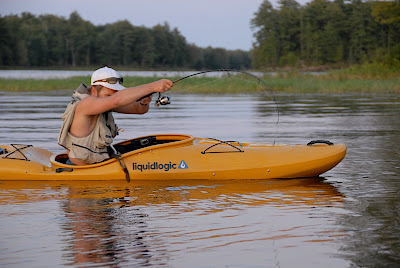
As I was leaving for my trip up to Canada to test the new Biscuit protos I got a couple of the new production Remix XPs to bring along as well. I figured they would be fun to have, because of all the flatwater on the Ottawa and Marlow said that the fishing was good. You can't playboat all day every day, can you? Well I can't.


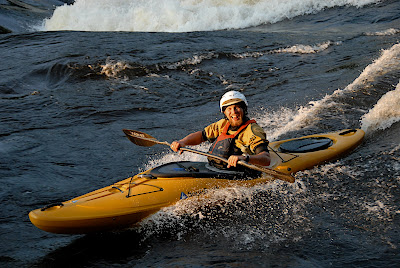
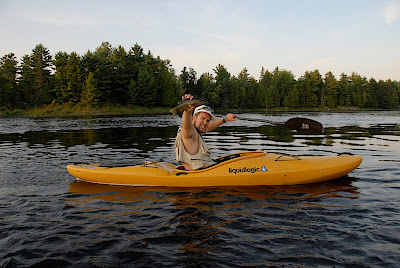
The XP is based on the Remix. It has almost the exact same lines and proportions as the Remix. All we changed really was the width, length, and I did peak the ends of the bow a bit to help it track just a little better. Woody and I have paddled these boats in a bunch of places on fairly hard whitewater and they have performed really well as a whitewater boat, then when you hit the flatwater you just drop the skeg and chill.


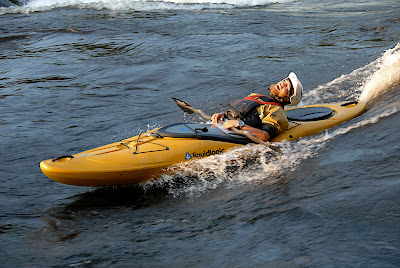
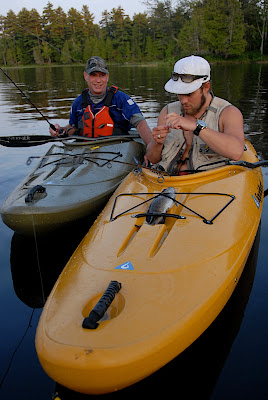
The first time we had them out was on the Ottawa river. Marlow was fired up to do some fishing, and the sun was setting after a full day of playboating so it was all relaxing. Except for the fact that we needed to get down through Phil's hole. The boat was paddling well though so Marlow got the idea to try to surf the Hero Wave above Phil's. Not a big deal but if you wash off too far one way you have a decent chance of ending up in a big hole. Fortunately there is a big pool below the rapid. But what happened was that the XP surfed the wave like a dream. Mar was able to cruise around on the wave and "carve" about. Then a really funny thing happened Marlow got this idea, "hey I am going to drop the skeg". Thats when the really funny part started. The boat tracked perfectly on the wave. Marlow picked up his paddle, and of course the first thing you do is "air guitar", then he pretended to fall asleep, and then lay his paddle down and just sit there while the boat just cruise surfed a nice wave above Phil's hole. Next, "lets test the hatch and spray skirt". Marlow takes off and drops through Phil's backwards and everthing holds on fine.


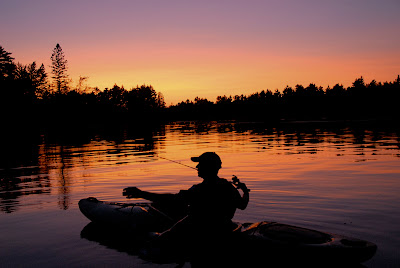
Of course after that its back to serious fishing. We cruised the flats from McCoys back down to CJ's house fishing all the way. Mar caught a couple of fish looking like the true outdoorsman that he is and actually caught a pretty nice fish but after getting it in the boat it got away while shooting pictures of all things. After our first test of the final production Remix XP 10 we are giving it a huge thumbs up and who would have thought it would surf waves like that. Self support on the Canyon here we come. Hope everyone's summer is going well. Shane


Thứ Hai, 1 tháng 9, 2008

FREE eBOOK for Migrating Board Drafting and Hand Sketch Designs to CAD

Are you an engineer, draftsman, architect, landscape artist, surveyor, sheet metal wood or plastics designer that does all drawings using a t-square and triangle? Are you thinking about using CAD but worried about the cost involved? CADDIT is happy to release a new, complete free eBook entitled "CADDIT Guide: From Board Drafting and Hand Sketch Designs to CAD" to answer these questions and more. Even if you are a CAD designer with several years experience, the reference information given in this free publication is well worth having. This free eBook is available now from http://www.caddit.net/auto-cad/AutoCAD.php and discussion is held on the CADDIT forum at http://www.caddit.net/forum/ .

This eBook includes the first section of a CAD tutorial that demonstrates opening and editing AutoCAD files without AutoCAD software, using progeCAD Professional CAD software. More information about progeCAD is at http://www.caddit.net/store/index.php?main_page=product_info&products_id=1